Buy Semaglutide Research Peptide Online: A peptide for weight loss
Buy Semaglutide Research Peptide Online: A peptide

Last updated: June 4, 2026
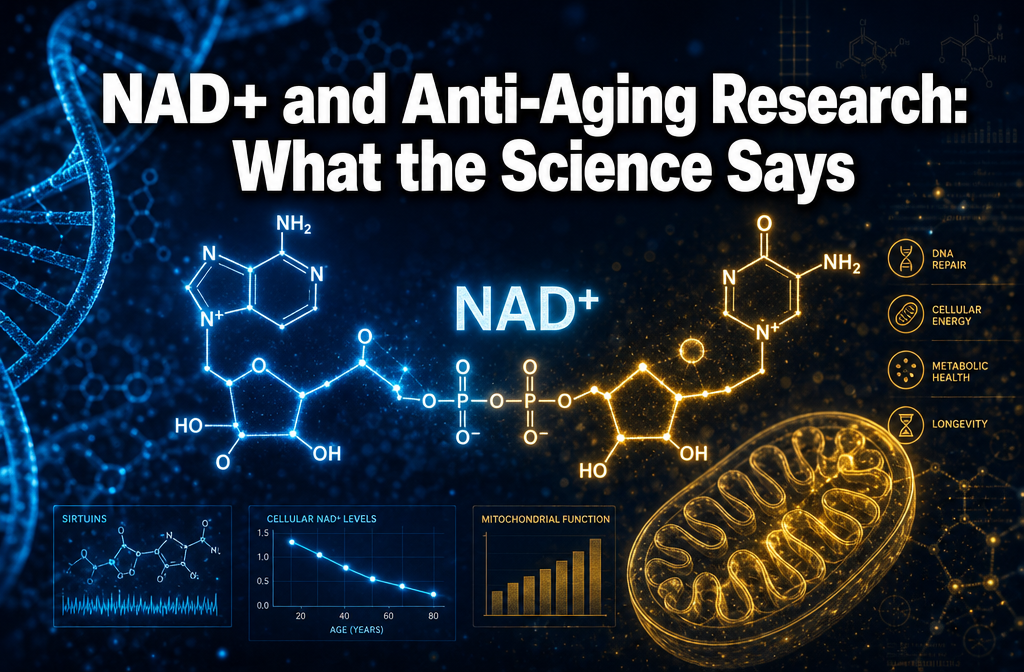
Quick Answer: NAD+ (nicotinamide adenine dinucleotide) is a coenzyme found in every living cell that drives energy metabolism, DNA repair, and gene expression regulation. Its levels decline measurably with age, and that decline is now understood to contribute to multiple hallmarks of cellular aging. Understanding what is NAD+ and why does it matter for anti-aging research is increasingly central to longevity science, with preclinical and early clinical studies pointing to NAD+ restoration as a promising avenue for investigating age-related cellular decline.
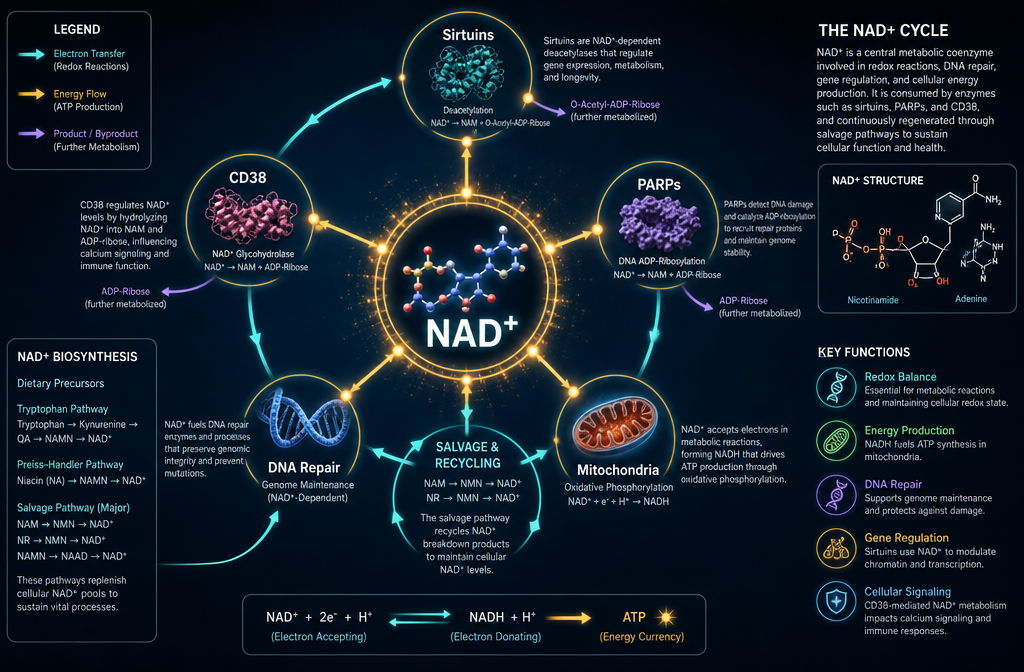
NAD+ (nicotinamide adenine dinucleotide, oxidised form) is a coenzyme present in every cell of the body, functioning primarily as an electron carrier in metabolic redox reactions. It accepts electrons from nutrients during glycolysis and the citric acid cycle, becoming NADH, which then donates those electrons to the mitochondrial electron transport chain to generate ATP — the cell’s primary energy currency [6].
Beyond energy metabolism, NAD+ serves as a direct substrate for three classes of enzymes with profound relevance to aging biology:
A 2026 mechanistic review describes NAD+ as a “central metabolic hub” that intersects multiple hallmarks of aging, including genomic instability, mitochondrial dysfunction, and dysregulated nutrient sensing [9]. This positions NAD+ not as a peripheral molecule but as a systems-level regulator whose status influences the pace of cellular aging. For a deeper examination of the molecular mechanisms involved, see Sempica’s detailed resource on the molecular mechanisms and benefits of NAD+ for anti-aging in research.
NAD+ and NAD are not the same thing, and the distinction matters for interpreting research accurately. NAD refers to the full redox couple — both the oxidised form (NAD+) and the reduced form (NADH). NAD+ is the oxidised, electron-accepting form; NADH is the reduced, electron-carrying form.
In the context of anti-aging research, NAD+ is the biologically active form that sirtuins and PARPs require as a substrate. NADH cannot substitute in these signalling roles. When researchers discuss “NAD+ decline with age,” they are specifically referring to falling intracellular concentrations of the oxidised form, not the total NAD pool [1][6].
The NAD+/NADH ratio is also a meaningful metric in metabolic research. A higher ratio generally indicates a more oxidised cellular environment associated with active metabolism, while a lower ratio can signal mitochondrial stress or metabolic dysfunction. Both the absolute level of NAD+ and this ratio are relevant variables in longevity and metabolic disease research.
NAD+ levels in human tissue decline by an estimated 40–60% between early adulthood and later life, though exact figures vary by tissue type and methodology [2][5]. This decline is not incidental — it is mechanistically linked to the aging process itself through several converging pathways.
Three primary drivers of age-related NAD+ decline have been identified in research:
The downstream consequences of this depletion are significant. Reduced NAD+ availability impairs sirtuin activity, leading to reduced mitochondrial biogenesis, increased oxidative stress, and dysregulated gene expression. It also compromises PARP-mediated DNA repair, allowing genomic damage to accumulate. Together, these effects map directly onto recognised hallmarks of aging, making NAD+ depletion a mechanistically credible contributor to biological aging — not merely a correlate of it [6][9].
Preclinical evidence is compelling; human clinical evidence is promising but still developing. In animal models, NAD+ restoration via precursors such as NMN and NR has been shown to improve mitochondrial function, reduce markers of cellular senescence, enhance muscle function, and extend healthspan in multiple species [1][4]. These findings have generated substantial interest in the longevity research community.
In human studies, early-phase trials have demonstrated that oral NMN and NR supplementation can raise blood NAD+ levels measurably [5][4]. However, translating elevated blood NAD+ into confirmed functional outcomes in humans remains an active area of investigation. A 2026 New York Times analysis of the longevity supplement landscape noted that while the preclinical data for NAD+ precursors is among the strongest in the field, large-scale randomised controlled trials in humans are still needed to confirm functional benefits [4].
What researchers broadly agree on is that NAD+ restoration addresses a real and measurable biological deficit. Whether that restoration translates into meaningful slowing of human aging — and at what dose, duration, and form — is precisely what current research is designed to determine [5][9].
“The preclinical case for NAD+ restoration is mechanistically coherent and reproducible across multiple model systems. The human data is early but directionally consistent.” — summarised from current longevity research literature [4][5]
Research suggests NAD+ may play a role in several age-related disease pathways, though it is critical to frame these as research observations rather than therapeutic claims. In preclinical models, NAD+ restoration has been investigated in the context of neurodegeneration, metabolic disease, and cardiovascular aging [6][9].
Neurodegeneration research: NAD+ depletion has been observed in models of Alzheimer’s disease, and sirtuin activation via NAD+ has been shown to reduce amyloid-beta accumulation and tau pathology in preclinical settings. Researchers investigating neurodegeneration are actively studying whether NAD+ precursors can support neuronal resilience [1][9].
Metabolic disease research: NAD+ is closely linked to insulin sensitivity via SIRT1 and AMPK signalling. In preclinical models, NAD+ restoration has improved glucose homeostasis and reduced markers of insulin resistance. This intersects with research on compounds like MOTS-c, which also modulates AMPK pathways in metabolic disease models.
Cardiovascular research: A review published in Circulation identified NAD+ metabolism as a key pathway in cardiac aging and heart failure biology, with sirtuin-mediated mitochondrial protection as a central mechanism [6].
These are research-stage findings. None constitute evidence that NAD+ supplementation treats, cures, or prevents any disease in humans.
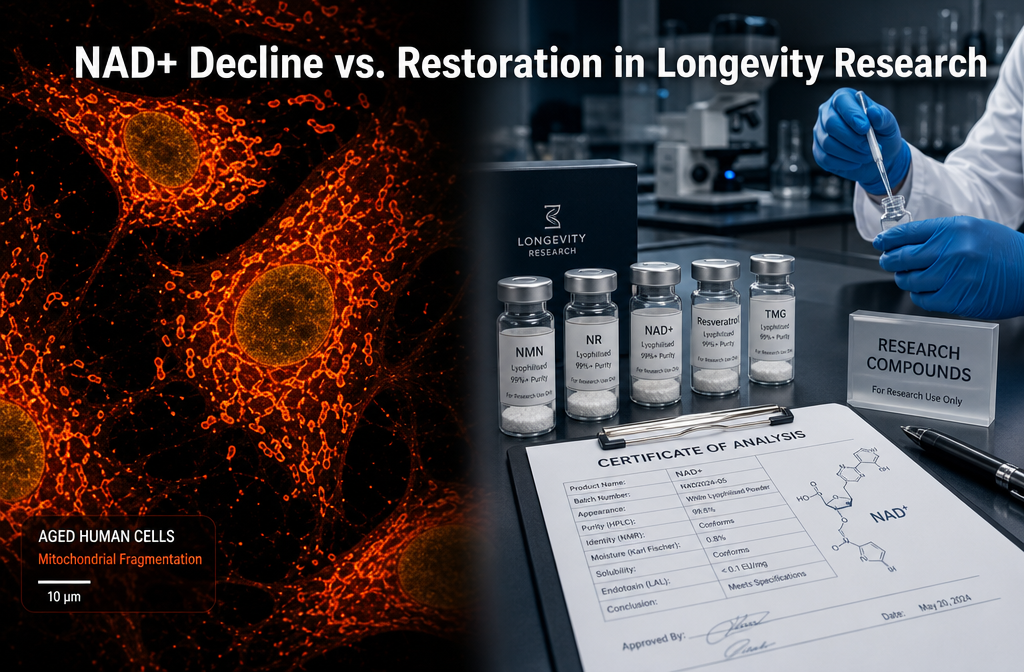
NAD+ is available in several research-relevant forms, each with different cost profiles and delivery characteristics. For laboratory research purposes, the primary formats are:
| Format | Typical Research Use | Notes |
|---|---|---|
| Lyophilised NAD+ powder | Direct compound research, in vitro studies | Highest purity; requires careful storage (-20°C, light-protected) |
| NMN (nicotinamide mononucleotide) | Precursor supplementation research | Crosses cell membrane more readily than NAD+ itself |
| NR (nicotinamide riboside) | Oral bioavailability studies | Well-studied precursor; multiple human trials completed |
| IV NAD+ infusions | Clinical research protocols | Higher cost; used in specialised research settings |
For research compound procurement, NAD+ is available as a high-purity lyophilised powder. Sempica’s NAD+ research compound is produced to a 99.8% purity standard, independently verified by Certificate of Analysis. Pricing varies by quantity; researchers should consult the product listing for current specifications.
IV NAD+ infusion protocols in clinical research settings can range from several hundred to over a thousand dollars per session depending on the facility and protocol design [2][5]. Oral precursor supplements (NMN, NR) are considerably less expensive but have different bioavailability and research application profiles.
In human studies to date, oral NAD+ precursors (NMN and NR) have generally shown favourable tolerability profiles at the doses studied. Reported adverse effects have been mild and transient, including nausea, flushing, and gastrointestinal discomfort in some participants [2][5].
IV NAD+ infusions, used in some research and clinical settings, have been associated with more pronounced transient effects including chest tightness, nausea, and headache during administration, typically resolving after slowing the infusion rate [2]. These observations are from early clinical research and should not be interpreted as a comprehensive safety profile.
Important caveats for researchers:
In a research context, NAD+ is most relevant to investigators working across longevity biology, metabolic disease, neurodegeneration, and mitochondrial dysfunction. It is a compound with broad mechanistic relevance, making it applicable to multiple research programmes simultaneously.
Research profiles where NAD+ is most relevant:
Research contexts where NAD+ may be less central:
For researchers exploring the intersection of NAD+ with metabolic pathways, it is worth noting that MOTS-c and NAD+ share downstream AMPK signalling relevance, making them complementary compounds in metabolic longevity research programmes.
Preclinical evidence suggests the magnitude of benefit from NAD+ restoration is greater in aged subjects, because the deficit being corrected is larger. In young, healthy animal models with normal NAD+ levels, supplementation produces modest effects. In aged models with significantly depleted NAD+, restoration produces more pronounced improvements in mitochondrial function, muscle performance, and metabolic markers [1][9].
A study referenced on nad.com noted that NAD+ levels appear to remain relatively stable in healthy individuals but drop significantly in the context of disease or aging-related stress [3]. This suggests that the research population most likely to show measurable responses to NAD+ restoration is one where depletion is already established — typically older subjects or those with metabolic or inflammatory disease burden.
For younger research subjects without significant NAD+ depletion, the primary research value may lie in understanding the mechanisms of NAD+ biosynthesis and precursor conversion rather than observing restoration effects.
Several physiological interventions have been shown in research to support NAD+ biosynthesis through endogenous pathways. These are relevant both as research variables and as context for understanding NAD+ biology.
Exercise: Physical activity activates AMPK and SIRT1 signalling, which upregulates the NAD+ salvage pathway. Both aerobic and resistance exercise have been shown to raise skeletal muscle NAD+ levels in preclinical models [9].
Caloric restriction and fasting: Reducing caloric intake shifts the NAD+/NADH ratio toward a more oxidised state, activating sirtuins. This is one proposed mechanism behind the longevity effects of caloric restriction observed in multiple model organisms [1].
Dietary precursors: Foods containing niacin (vitamin B3), tryptophan, and nicotinamide riboside provide raw materials for NAD+ biosynthesis via the de novo and salvage pathways. The relationship between dietary niacin and NAD+ is also relevant to understanding what niacinamide does in cellular biochemistry.
Heat and cold exposure: Emerging preclinical research suggests that thermal stress (sauna, cold immersion) may modulate NAD+ metabolism, though the mechanisms and magnitudes are less well characterised than exercise or caloric restriction.
These natural interventions are meaningful research variables but are generally considered insufficient to fully compensate for age-related NAD+ depletion in research models where significant deficits exist.
Several methodological and interpretive errors appear repeatedly in NAD+ research literature and supplementation studies. Researchers designing protocols should be aware of these.
Measuring blood NAD+ as a proxy for tissue NAD+: Blood or plasma NAD+ levels do not reliably reflect intracellular NAD+ concentrations in target tissues such as muscle, brain, or liver. Studies relying solely on blood measurements may overstate or mischaracterise the effects of supplementation [4][5].
Conflating NAD+ precursors: NMN and NR have different conversion pathways, bioavailability profiles, and tissue distribution. Research findings from one precursor cannot be directly extrapolated to the other without specific comparative data.
Ignoring CD38 as a confounder: In aged or inflamed research subjects, elevated CD38 activity can rapidly degrade supplemental NAD+, reducing the effective intracellular increase. Studies that do not account for CD38 status may underestimate the dose required for meaningful restoration [6].
Short study durations: Many human trials have run for 8–12 weeks. Given that the biological processes NAD+ influences (mitochondrial biogenesis, DNA repair fidelity, sirtuin-mediated gene regulation) operate over longer timeframes, short studies may miss functionally relevant outcomes [4].
Storage errors: NAD+ is highly sensitive to light and moisture. Lyophilised NAD+ powder must be stored at -20°C and protected from light. Degraded compounds produce unreliable research data. Researchers should consult compound-specific storage protocols and verify purity via Certificate of Analysis before use.
In preclinical models, measurable changes in NAD+ levels following supplementation can be detected within days to weeks. Functional outcomes — such as improvements in mitochondrial respiration, muscle endurance, or metabolic markers — typically emerge over weeks to months depending on the model and endpoint [1][9].
In human studies, blood NAD+ levels rise within days of beginning NMN or NR supplementation at standard research doses [5]. However, translating elevated NAD+ into measurable functional outcomes (cognitive performance, physical function, metabolic markers) has required study durations of 8 weeks or longer in most published trials [4].
The timeline also depends heavily on baseline NAD+ status. Subjects with significant depletion show faster and larger responses than those with near-normal baseline levels. Researchers should establish baseline NAD+ measurements before beginning protocols to enable meaningful interpretation of results.
Understanding what is NAD+ and why does it matter for anti-aging research requires engaging with both its fundamental biochemistry and its systems-level role in aging biology. NAD+ is not simply an energy molecule — it is a regulatory hub whose declining availability with age disrupts DNA repair, mitochondrial function, sirtuin signalling, and metabolic homeostasis simultaneously. That convergence of mechanisms explains why NAD+ has become one of the most studied molecules in longevity science.
The research landscape in 2026 reflects a field that has moved well beyond hypothesis. Preclinical evidence is mechanistically coherent and reproducible. Early human trials show that NAD+ levels can be raised pharmacologically. The remaining scientific work centres on determining which interventions, doses, and populations produce the most meaningful functional outcomes.
Actionable next steps for researchers:
For a broader view of the compounds available for longevity and metabolic research, Sempica’s lab-tested research compounds catalogue provides a comprehensive starting point.
All products referenced in this article are intended for research purposes only. They are not for human consumption, medical use, or therapeutic application. By purchasing from this website, you confirm that you are a qualified professional and will use these products strictly for laboratory research.
What is NAD+ in simple terms?
NAD+ is a coenzyme found in every cell that helps convert food into energy and activates enzymes responsible for DNA repair and gene regulation. Its levels decline with age, which is why it is central to anti-aging research.
What is the difference between NAD+ and NADH?
NAD+ is the oxidised form that accepts electrons; NADH is the reduced form that carries them. In anti-aging research, NAD+ is the form required by sirtuins and PARPs — the enzymes most relevant to aging biology.
Does NAD+ actually work for anti-aging?
Preclinical evidence is strong and mechanistically well-supported. Human clinical data is promising but still developing. NAD+ restoration addresses a real biological deficit, and current research is focused on quantifying functional outcomes in humans.
What is the best form of NAD+ for research?
For in vitro and in vivo research, high-purity lyophilised NAD+ powder is the standard form. For oral bioavailability studies, NMN and NR are the most widely used precursors in current human trials.
How should NAD+ research compounds be stored?
Lyophilised NAD+ powder must be stored at -20°C, away from light and moisture. It is among the most environmentally sensitive research compounds and will degrade rapidly if storage conditions are not maintained.
Can NAD+ be combined with other longevity compounds in research?
Yes. NAD+ is frequently studied alongside compounds such as Epithalon (telomere biology), MOTS-c (AMPK/mitochondrial signalling), and resveratrol (sirtuin activation) in multi-pathway longevity research protocols.
Why do NAD+ levels decline with age?
Three primary mechanisms drive age-related NAD+ decline: increased PARP activation from accumulating DNA damage, upregulation of CD38 driven by chronic inflammation, and reduced efficiency of the NAD+ salvage biosynthetic pathway.
Are NAD+ supplements safe?
In human trials to date, oral NAD+ precursors have shown generally favourable tolerability. IV NAD+ has been associated with transient side effects during administration. Long-term safety data in humans is still limited, and all research compounds must be used only in qualified laboratory settings.
Who benefits most from NAD+ research protocols?
Aged research subjects with established NAD+ depletion show the largest responses to restoration protocols. Younger subjects with normal NAD+ levels show more modest effects, making them better suited to mechanistic studies than restoration outcome studies.
Is NAD+ the same as vitamin B3?
No, but they are related. Niacin (vitamin B3) and its derivatives (nicotinamide, NMN, NR) are precursors to NAD+ via the salvage and de novo biosynthetic pathways. NAD+ itself is the downstream coenzyme produced from these precursors.
[1] Pmc7494058 – https://pmc.ncbi.nlm.nih.gov/articles/PMC7494058/
[2] Nad Supplement – https://health.clevelandclinic.org/nad-supplement
[3] Nad Levels Stay Stable In Healthy People But Drop In Disease New Study Shows – https://www.nad.com/news/nad-levels-stay-stable-in-healthy-people-but-drop-in-disease-new-study-shows
[4] Nad Longevity Supplement Antiaging – https://www.nytimes.com/2026/05/23/well/nad-longevity-supplement-antiaging.html
[5] Nad Infusions Supplements Longevity Science – https://www.npr.org/2026/05/11/nx-s1-5813664/nad-infusions-supplements-longevity-science
[6] Circulationaha.121 – https://www.ahajournals.org/doi/10.1161/CIRCULATIONAHA.121.056589
[9] S0047637426000266 – https://www.sciencedirect.com/science/article/abs/pii/S0047637426000266
Buy Semaglutide Research Peptide Online: A peptide
Buy Tirzepatide Compound: The miracle peptide for
What is NAD+ and why does NAD+