Buy Semaglutide Research Peptide Online: A peptide for weight loss
Buy Semaglutide Research Peptide Online: A peptide

Quick Answer: GHK-Cu (copper peptide, INCI: Copper Tripeptide-1) is a naturally occurring tripeptide complexed with copper (Cu²⁺) that has been extensively studied for its roles in tissue remodelling, collagen synthesis, and extracellular matrix regulation. Qualified research professionals who want to buy GHK-Cu copper peptide for laboratory use should source it from verified suppliers offering independently tested compounds with a Certificate of Analysis (CoA). It is not approved as a systemic medicine in any major jurisdiction and is sold strictly for research purposes only.
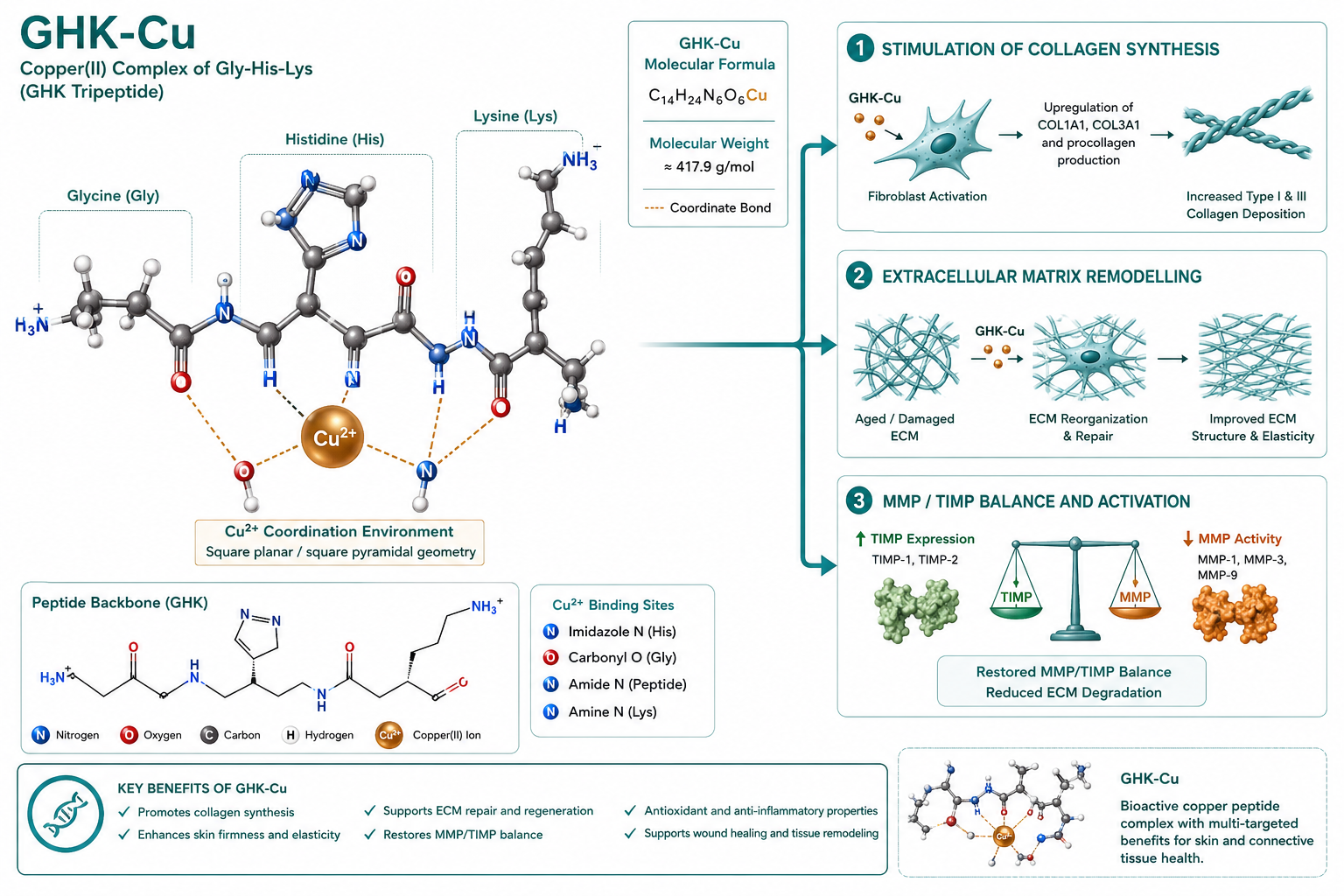
GHK-Cu is a naturally occurring human tripeptide — glycine-histidine-lysine (Gly-His-Lys) — complexed with a copper (Cu²⁺) ion. It was first isolated from human plasma in the early 1970s and has since become one of the most studied peptides in regenerative biology and skin research [1][2].
The compound works through several interconnected mechanisms:
“GHK-Cu acts as a biological signal that activates the body’s own repair machinery — but in research contexts, this activity is studied in controlled preclinical settings, not as an approved therapeutic intervention.” [2]
Common mistake: Confusing biological activity demonstrated in preclinical research with clinical approval. GHK-Cu has compelling mechanistic data, but no regulatory body has approved it as a systemic medicine [3][7].
Preclinical and in vitro research consistently supports GHK-Cu’s role in collagen synthesis and skin matrix remodelling. In fibroblast culture studies, the compound has been shown to stimulate collagen production and suppress enzymes responsible for collagen degradation [9].
When used topically as Copper Tripeptide-1 in cosmetic formulations, it is positioned as an anti-aging ingredient in skin repair products — a regulated cosmetic application distinct from systemic or injectable research use [4]. Laboratory investigations indicate that GHK-Cu may:
Decision rule: If the research goal involves extracellular matrix biology, collagen pathway investigation, or wound healing models, GHK-Cu is a well-characterised compound with a strong preclinical evidence base. If the goal is confirmed therapeutic outcomes in humans, no such regulatory approval exists [7].
The scientific literature on GHK-Cu is substantial for a peptide of its size. A peer-reviewed open-access review published in PMC (2018) describes it as a naturally occurring human peptide that can improve tissue repair in skin and other tissues, modulating gene expression across antioxidant, anti-inflammatory, and regenerative pathways [2]. A separate MDPI cosmetics review reinforces its mechanistic support for wound repair, collagen synthesis, and anti-inflammatory signalling [9].
Key findings from the published research base include:
Important constraint: All of this research is framed in preclinical or exploratory contexts. Wikipedia’s overview positions GHK-Cu as a cosmetic ingredient with “proposed” benefits in humans rather than an approved medicine with defined indications [1]. No large-scale randomised controlled trials have established systemic GHK-Cu as a validated human therapy.
Qualified research professionals looking to buy GHK-Cu copper peptide for laboratory use should prioritise suppliers who meet the following criteria.
What to look for in a research-grade supplier:
| Criterion | What to Verify |
|---|---|
| Purity standard | ≥99% confirmed by third-party testing |
| Certificate of Analysis (CoA) | Available per batch, from an independent laboratory |
| Compound form | Lyophilised powder (not pre-reconstituted) |
| Labelling | Clearly marked “research use only” |
| Regulatory compliance | Transparent about jurisdictional restrictions |
| Storage and shipping | Cold-chain capable, direct-to-door |
Sempica Healthcare supplies GHK-Cu 100mg as a lyophilised research compound tested to a 99.8% purity standard, with CoA documentation available for full traceability. All products are sold exclusively to qualified research professionals and are not intended for human consumption.
For researchers exploring multi-compound regeneration protocols, the Klow Stack (GHK-Cu / BPC-157 / TB-500 / KPV) and Glow Stack offer pre-formulated combinations relevant to extracellular matrix and skin regeneration research.
Before purchasing, review Sempica’s guide on how to buy genuine peptides online for laboratory use to understand sourcing best practices and compliance requirements.
Edge case: Some suppliers market GHK-Cu products without CoA documentation or with vague purity claims. In research settings, unverified purity directly compromises experimental validity. Always request batch-specific CoA data before procurement.
Research-grade GHK-Cu pricing varies based on vial size, purity standard, and supplier. As a general reference for 2026 market pricing:
What drives price variation:
Researchers should treat unusually low pricing as a red flag. Compounds priced significantly below market rate frequently lack verified CoA documentation or meet lower purity thresholds — both of which undermine experimental reproducibility.
This is one of the most important distinctions for anyone looking to buy GHK-Cu copper peptide. Three distinct product categories exist, and they are not interchangeable.
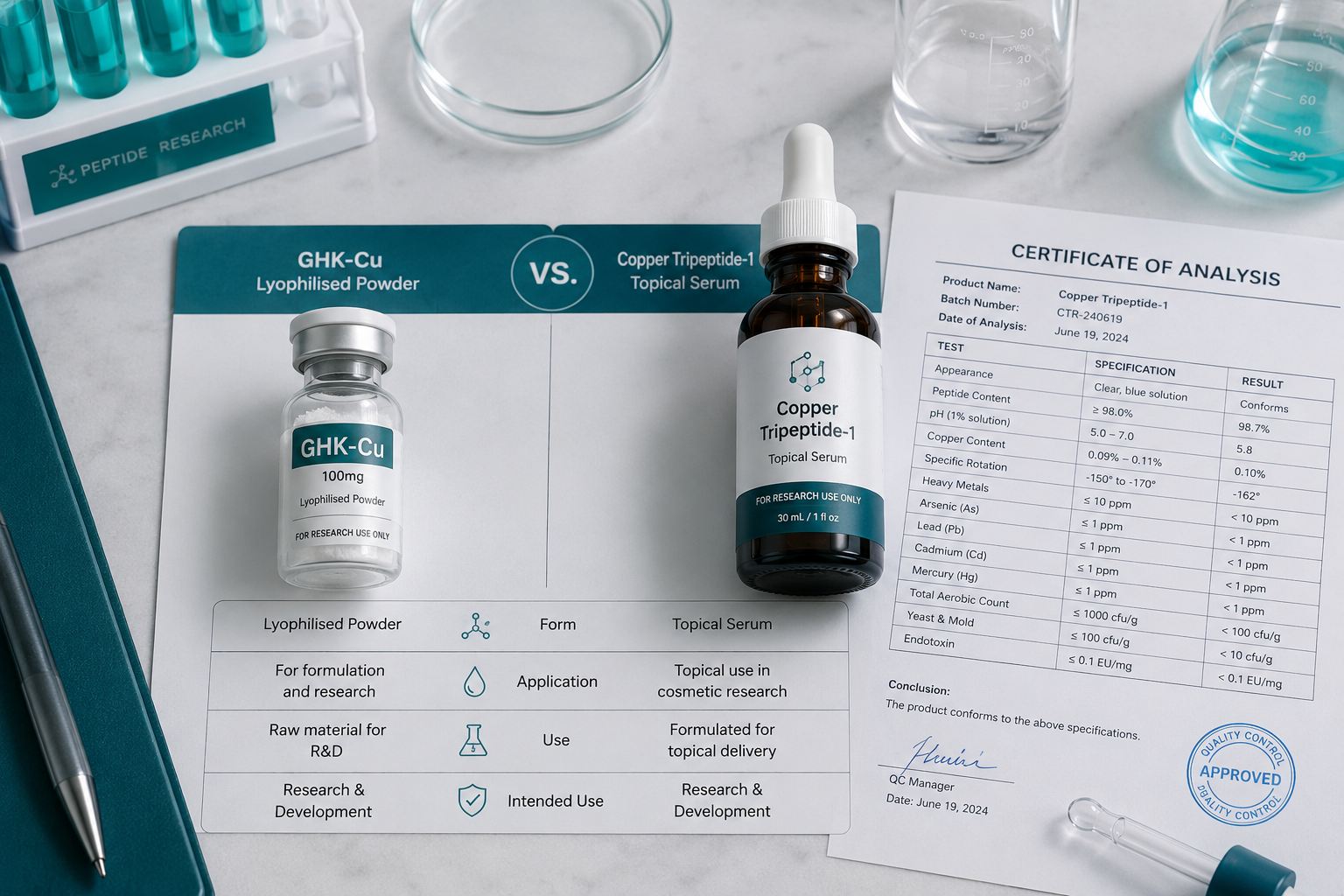
1. Topical cosmetic serums (Copper Tripeptide-1) These are regulated cosmetic products containing GHK-Cu at low concentrations. They are applied to the skin surface and are subject to cosmetic regulations in the EU, UK, and US. Claims must remain cosmetic — no medicinal language is permitted. This is the only consumer-facing application with a clear regulatory pathway [4][1].
2. Oral supplements Some consumer brands market GHK-Cu in capsule or powder form. Oral bioavailability of peptides is generally poor due to gastrointestinal degradation, and no regulatory approval exists for oral GHK-Cu as a therapeutic agent.
3. Research-grade lyophilised powder (injectable-grade) This is the format sold by research compound suppliers. It is a high-purity lyophilised powder intended for reconstitution and use in controlled laboratory settings. It carries no approval for human administration in any jurisdiction [3][7]. This is the format relevant to qualified research professionals.
Decision rule: Choose the topical serum format for cosmetic research applications. Choose the research-grade lyophilised compound for in vitro, in vivo, or preclinical laboratory investigation. Never conflate the two in research documentation.
GHK-Cu is not sex-specific in its mechanism of action or research applications. The compound operates at the level of fibroblast activity, extracellular matrix remodelling, and inflammatory signalling — pathways that are present and relevant across all biological sexes [2].
In preclinical research, GHK-Cu has been studied in both male and female animal models for wound healing, skin regeneration, and hair follicle biology [5]. There is no published evidence suggesting differential efficacy by sex in laboratory models.
For researchers investigating hair follicle biology specifically, the compound’s role in stimulating hair growth-related signalling has been explored in both androgenic and non-androgenic contexts. Sempica’s androgen and hair follicle research compounds section includes relevant compounds for this research area, including AHK-Cu and Menogaine.
In cosmetic research contexts, copper peptides are generally well-tolerated across most skin types. However, specific conditions and formulation interactions warrant attention in research design.
Contexts where caution is indicated:
Common mistake in research design: Combining GHK-Cu with incompatible actives in the same formulation without pH and stability testing. This is a frequent source of inconsistent results in skin biology studies.
In preclinical research, the timeline for measurable outcomes depends entirely on the model system, endpoint, and administration route. There is no standardised human dosing protocol for systemic GHK-Cu [7].
Typical research timelines by model type:
Edge case: Researchers should not extrapolate in vitro timelines to in vivo models, or preclinical timelines to human applications. Each model system requires its own validated endpoint and observation window.
In the published preclinical literature, GHK-Cu demonstrates a favourable safety profile at physiological concentrations. However, several risk factors are relevant to research design and compound handling.
Documented considerations:
From a regulatory and compliance standpoint: GHK-Cu has no approved systemic dosing protocol in humans, and no clinical safety data exists from controlled human trials at injectable doses. Any reference to “safe for human use” in supplier marketing is not supported by regulatory approval [3][7].
Several compounds support collagen synthesis and tissue repair through mechanisms that partially overlap with GHK-Cu, though none are structurally or mechanistically equivalent.
| Alternative | Mechanism | Research Overlap with GHK-Cu |
|---|---|---|
| Vitamin C (ascorbic acid) | Cofactor for collagen hydroxylation | Collagen synthesis support |
| Retinoids (retinol, tretinoin) | RAR/RXR nuclear receptor activation | Extracellular matrix remodelling |
| Matrixyl (palmitoyl pentapeptide-4) | TGF-β pathway stimulation | Collagen I and III synthesis |
| BPC-157 | FAK-paxillin signalling, angiogenesis | Tissue repair, wound healing |
| TB-500 (Thymosin Beta-4) | Actin binding, cell migration | Wound healing, anti-inflammatory |
For researchers studying multi-pathway regeneration, combining GHK-Cu with BPC-157 and TB-500 in a structured research stack is a documented approach in the preclinical literature. Sempica’s Klow Stack is formulated for exactly this type of multi-compound investigation.
Decision rule: Use GHK-Cu when the research focus is specifically on copper-dependent MMP/TIMP regulation or copper ion biology. Use BPC-157 or TB-500 when the primary interest is in growth factor receptor upregulation or actin-mediated cell migration.
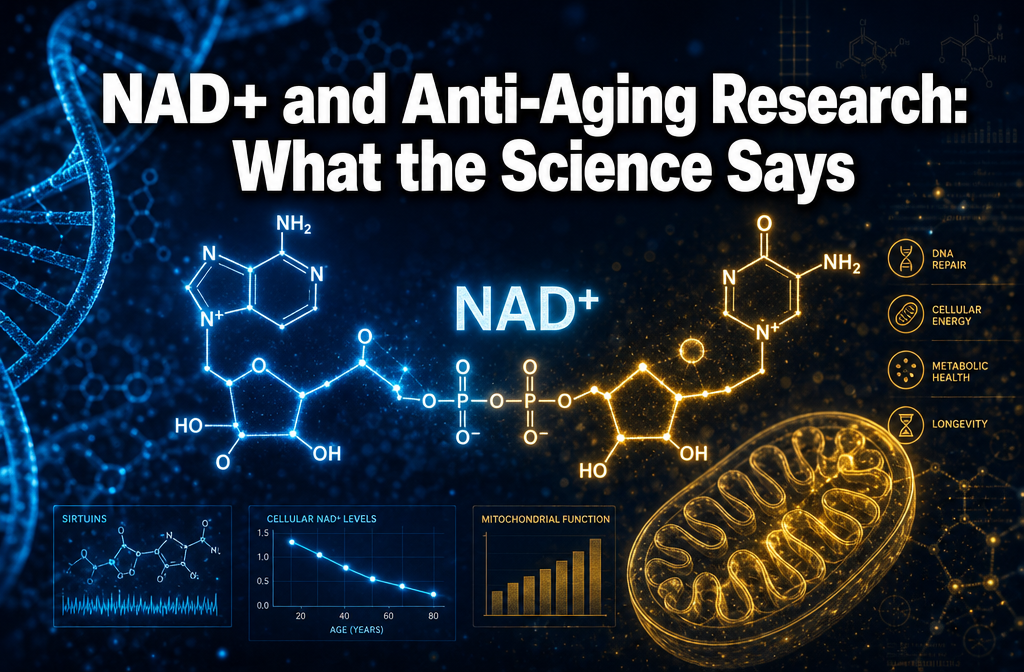
For broader context on longevity-related research compounds, the NAD+ molecular mechanisms and anti-aging research guide provides a useful parallel reference.
Even experienced laboratory professionals encounter avoidable errors when working with copper peptides. The following are the most frequently documented issues.
1. Incorrect reconstitution technique Adding bacteriostatic water directly onto the lyophilised powder rather than down the side of the vial can damage the peptide structure. Always inject diluent slowly against the vial wall and swirl gently — never vortex or shake. For full protocol detail, refer to Sempica’s laboratory guide on how to mix and store peptides.
2. Freezing reconstituted solution Reconstituted GHK-Cu should be stored at 2–8°C and used within 7–14 days. Freezing a reconstituted solution causes ice crystal formation that degrades peptide integrity.
3. Combining with incompatible actives As noted above, high-concentration vitamin C and strong acids can destabilise the copper-peptide complex. Formulation compatibility testing is essential before combining compounds.
4. Sourcing without CoA verification Purchasing GHK-Cu without batch-specific CoA documentation introduces unquantified purity variables that compromise experimental reproducibility. This is the single most common sourcing error in independent research settings [8].
5. Misrepresenting research findings Extrapolating preclinical GHK-Cu data to human therapeutic claims is both scientifically unsound and non-compliant with research-use-only regulations [3][7].
Q: Is GHK-Cu approved for human use? No. GHK-Cu has no FDA approval as a drug and no MHRA marketing authorisation as a systemic medicine in the UK. It is sold strictly as a research-use-only compound in injectable/lyophilised form [3][7].
Q: What purity standard should research-grade GHK-Cu meet? A minimum of 99% purity, verified by an independent third-party laboratory with a batch-specific Certificate of Analysis. Sempica’s compounds are tested to 99.8% purity.
Q: What is the difference between GHK-Cu and Copper Tripeptide-1? They are the same compound. Copper Tripeptide-1 is the INCI (cosmetic ingredient) name used in topical formulations. GHK-Cu is the scientific designation used in research contexts [1][4].
Q: How should GHK-Cu be stored after purchase? Lyophilised powder: -20°C, away from light and moisture, until ready for use. Reconstituted solution: 2–8°C, used within 7–14 days. Never freeze a reconstituted solution.
Q: Can GHK-Cu be used in combination with other research peptides? Yes, in research settings. Multi-compound stacks including GHK-Cu, BPC-157, and TB-500 are used in cellular regeneration and wound healing research protocols.
Q: Is there a standardised dose for GHK-Cu in human research? No. There is no approved or standardised systemic dosing protocol for humans. All dosing references in the literature are from preclinical models [7].
Q: How do I verify that a GHK-Cu supplier is legitimate? Request a batch-specific CoA from an independent laboratory, confirm the compound is clearly labelled for research use only, and verify the supplier’s compliance documentation. See Sempica’s guide to buying genuine peptides online for a full sourcing checklist.
Q: What research area does GHK-Cu fall under? Primarily Cellular Regeneration (extracellular matrix remodelling, wound healing, angiogenesis) and Longevity Studies (anti-aging mechanisms, skin biology). It also features in hair follicle biology research.
GHK-Cu is one of the most extensively characterised peptides in regenerative biology, with a well-established preclinical evidence base spanning collagen synthesis, wound healing, extracellular matrix remodelling, and anti-inflammatory signalling [2][9]. For qualified research professionals, the compound represents a high-value tool across cellular regeneration and longevity research protocols.
Actionable next steps for researchers:
Researchers ready to buy GHK-Cu copper peptide can access Sempica’s GHK-Cu 100mg research compound directly through the digital storefront, with global shipping to 100+ countries and full CoA documentation included.
Research Use Only Disclaimer: Products sold on this website are intended for research purposes only. They are not for human consumption, medical use, or therapeutic application. By purchasing from this website, you confirm that you are a qualified professional and will use these products strictly for laboratory research.
[1] Copper Peptide GHK-Cu – https://en.wikipedia.org/wiki/Copper_peptide_GHK-Cu
[2] PMC6073405 – https://pmc.ncbi.nlm.nih.gov/articles/PMC6073405/
[3] GHK-Cu UK Complete Research Guide 2026 – https://peptideslabuk.com/ghk-cu-uk-complete-research-guide-2026/
[4] GHK-Cu The Beauty Peptide You’re About To Hear Everywhere In 2026 – https://www.insideindustry.co/post/ghk-cu-the-beauty-peptide-you-re-about-to-hear-everywhere-in-2026
[5] GHK-Cu The Peptide Regenerative And Anti-Aging – https://newtropin.com/blog/ghk-cu-the-peptide-regenerative-and-anti-aging/
[7] GHK-Cu Peptide Guide FDA Approved Dosage Where To Buy 2026 – https://injectco.com/ghk-cu-peptide-guide-fda-approved-dosage-where-to-buy-2026/
[8] Umbrella Labs Announces Documentation Traceability – https://finance.yahoo.com/sectors/healthcare/articles/umbrella-labs-announces-documentation-traceability-145600006.html
[9] MDPI Cosmetics Review – https://www.mdpi.com/2079-9284/2/3/236
Buy Semaglutide Research Peptide Online: A peptide
Buy Tirzepatide Compound: The miracle peptide for
What is NAD+ and why does NAD+