Semaglutide vs tirzepatide which is better for weight loss
Semaglutide vs tirzepatide which is better for

Quick Answer
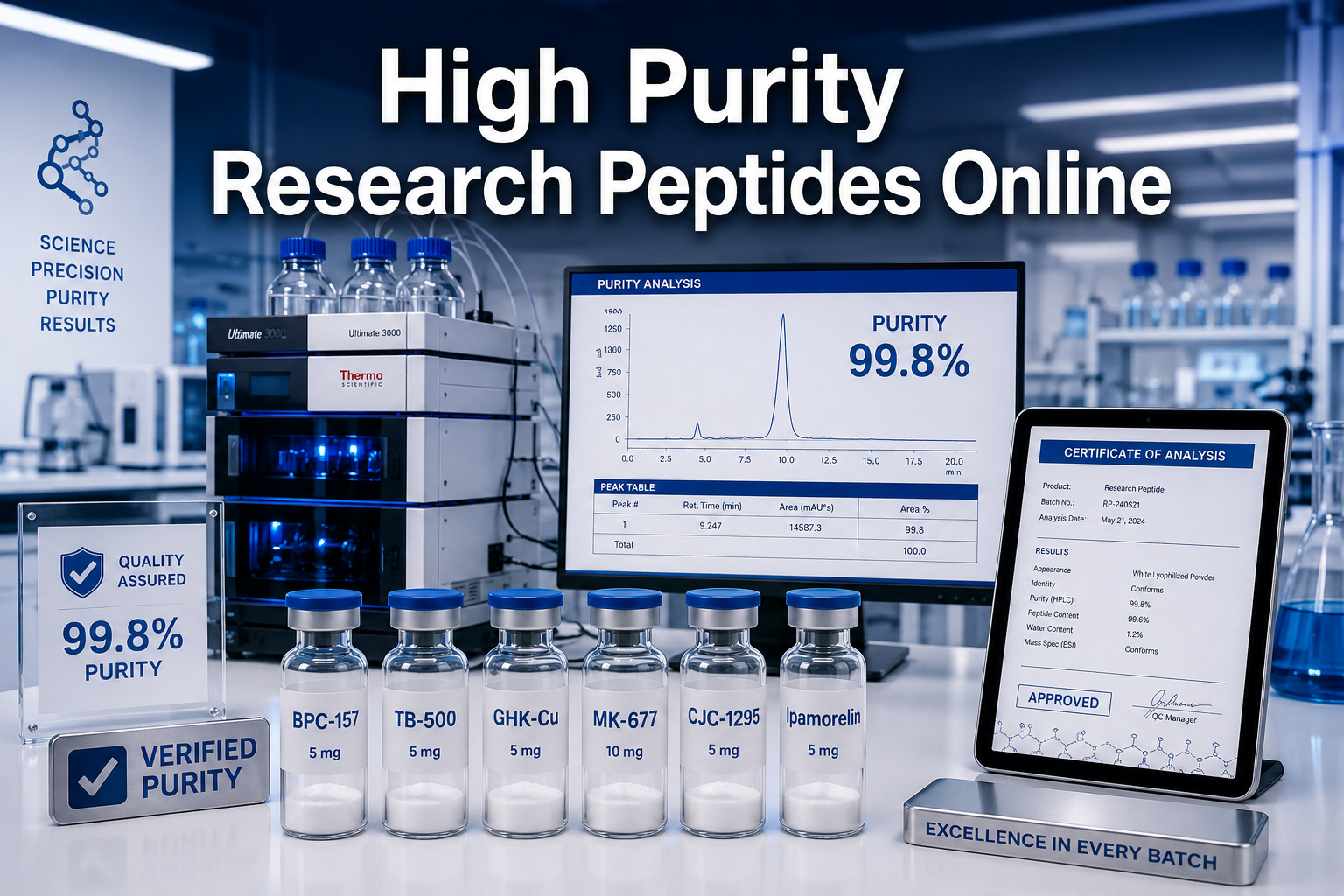
High purity research peptides online are synthetic compounds manufactured to 99.8% purity standards and sold exclusively for laboratory research through digital platforms. These compounds undergo independent third-party testing to verify identity, potency, and consistency, with Certificates of Analysis provided to ensure traceability. Qualified research professionals can purchase these peptides from verified suppliers like Sempica Healthcare, which ships to over 150 countries with proper documentation confirming research-use-only status.
High purity in research peptides refers to compounds manufactured to contain 99.8% or greater of the target peptide sequence, with minimal presence of synthesis by-products, truncated sequences, or contaminants. This purity threshold ensures that experimental results reflect the intended compound’s activity rather than artifacts introduced by impurities.
The purity percentage represents the ratio of the desired peptide to total peptide content in a sample, measured through High-Performance Liquid Chromatography (HPLC). A 99.8% purity standard means that for every 1,000 micrograms of material, at least 998 micrograms consist of the correct peptide sequence.
Why purity matters in research:
The manufacturing process for high purity peptides involves solid-phase peptide synthesis (SPPS), followed by multiple purification cycles using reverse-phase HPLC. Each synthesis batch undergoes analytical HPLC to generate a chromatogram showing the purity profile, with the target peptide appearing as a single dominant peak.
Sempica Healthcare maintains the 99.8% purity standard across all 200+ compounds in its catalogue, with independent verification performed by accredited third-party laboratories. This standard exceeds the typical 95-98% purity found in lower-grade research compounds.
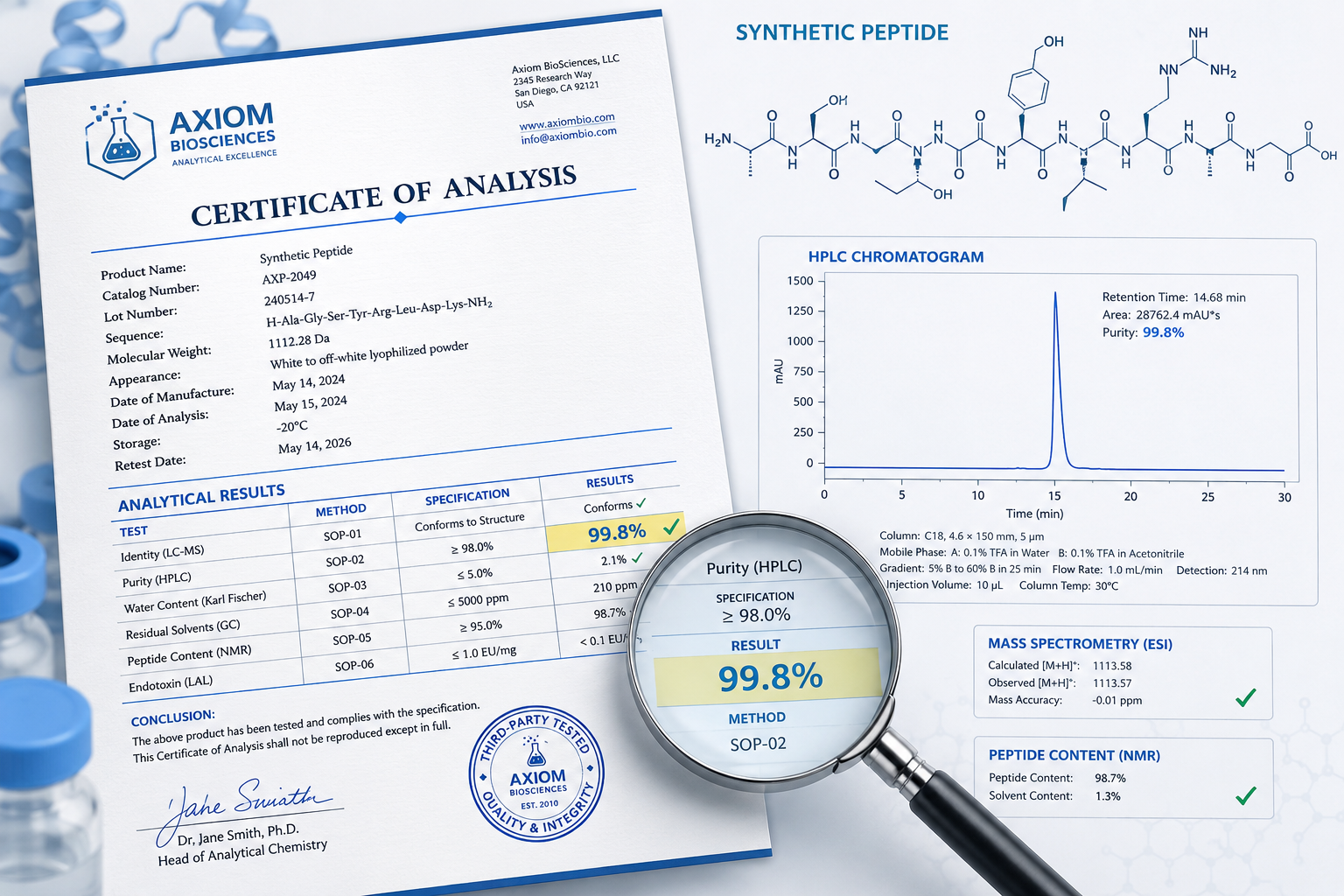
Verifying peptide purity certificates requires examining specific technical elements within the Certificate of Analysis (CoA) document that legitimate suppliers provide for each batch. A valid CoA contains quantifiable data from analytical testing, not generic quality claims.
Essential elements of a legitimate CoA:
To verify authenticity, cross-reference the batch number on your vial with the batch number on the CoA. The HPLC chromatogram should display a single sharp peak representing the target peptide, with minimal smaller peaks indicating impurities. The area under the main peak, expressed as a percentage of total peak area, represents purity.
Red flags indicating fraudulent certificates:
Sempica provides batch-specific CoAs accessible through the customer portal, with direct links to third-party laboratory verification. Each certificate includes the complete analytical profile, allowing researchers to confirm compound identity before use in protocols.
For additional verification, contact the listed testing laboratory directly to confirm the certificate’s authenticity. Legitimate laboratories maintain records of all analyses performed and can verify certificate validity when provided with the batch number.
High purity research peptides (≥99.8%) differ fundamentally from regular or lower-grade peptides (95-98% purity) in composition, reliability, and suitability for rigorous scientific investigation. The distinction extends beyond the numerical purity value to impact experimental outcomes and data interpretation.
Compositional differences:
| Aspect | High Purity (≥99.8%) | Regular Grade (95-98%) |
|---|---|---|
| Target peptide content | ≥998 mg per 1,000 mg | 950-980 mg per 1,000 mg |
| Synthesis by-products | <2 mg per 1,000 mg | 20-50 mg per 1,000 mg |
| Truncated sequences | Minimal (<0.5%) | 1-3% |
| Purification cycles | 3-5 HPLC runs | 1-2 HPLC runs |
| Batch consistency | ±0.2% variation | ±2-5% variation |
| Cost per vial | $150-$400 | $50-$150 |
The 2-5% difference in purity translates to significant variations in actual peptide content. A 10 mg vial at 95% purity contains only 9.5 mg of active peptide, while a 99.8% purity vial contains 9.98 mg—a difference that compounds across multi-dose protocols.
Research implications:
Regular-grade peptides may suffice for preliminary screening studies or educational demonstrations where precise dose-response relationships are not critical. High purity compounds are essential for mechanistic studies, receptor binding assays, dose optimization research, and any work intended for publication or regulatory submission.
The impurities in lower-grade peptides often consist of deletion sequences (missing one or more amino acids) or synthesis by-products that can exhibit partial agonist or antagonist activity at the target receptor. These contaminants introduce noise into experimental data, making it difficult to attribute observed effects solely to the intended compound.
For metabolic research compounds like Semaglutide or Tirzepatide, where receptor selectivity and dose precision are critical to understanding GLP-1 and GIP pathway interactions, the 99.8% purity standard ensures that experimental results reflect true receptor pharmacology rather than off-target effects from impurities.
Sempica’s commitment to the 99.8% threshold across all compounds—from simple tetrapeptides like Epithalon to complex 39-amino acid sequences like Semaglutide—ensures consistent research quality regardless of which compound your laboratory requires. This standardization eliminates purity as a variable when comparing results across different peptides.
Identifying legitimate suppliers of high purity research peptides online requires evaluating multiple credibility indicators beyond marketing claims. The research peptide market includes both professional scientific suppliers and unverified vendors, making due diligence essential.
Criteria for evaluating online peptide suppliers:
1. Purity documentation: Legitimate suppliers provide batch-specific Certificates of Analysis from independent laboratories, not generic quality statements. The CoA should include HPLC chromatograms and mass spectrometry data for verification.
2. Research-use-only compliance: Professional suppliers maintain clear disclaimers that products are not for human consumption and implement verification processes to ensure compounds reach qualified research environments. Avoid vendors marketing peptides with therapeutic claims or consumer wellness language.
3. Transparent testing protocols: Credible suppliers specify their testing methodology, including the analytical techniques used (HPLC, MS, NMR) and the accreditation status of testing laboratories.
4. Professional infrastructure: Legitimate suppliers operate through professional digital platforms with secure payment processing, proper business registration, and accessible customer support staffed by individuals with scientific knowledge.
5. Catalogue breadth and depth: Established suppliers maintain comprehensive catalogues with detailed technical specifications for each compound, including molecular weight, sequence, storage requirements, and research applications.
Sempica Healthcare exemplifies these standards, operating as a global supplier with 200+ research compounds, all manufactured to 99.8% purity and independently verified. The platform ships to over 150 countries with proper documentation and maintains transparent communication channels at info@sempicahealthcare.ch.
Warning signs of unreliable vendors:
For researchers requiring specific compounds like BPC-157 for tissue repair studies or NAD+ for longevity research, verify that the supplier provides the exact molecular form needed. For example, NAD+ should be supplied as the oxidized coenzyme form, not as a precursor like NMN or NR, unless the precursor is specifically required for your protocol.
The comprehensive laboratory guide on how to mix and store peptides provides additional context on proper handling procedures that legitimate suppliers should reference in their documentation.
High purity research peptides online typically range from $80 to $400 per vial, with pricing determined by synthesis complexity, amino acid sequence length, purification requirements, and market demand. Understanding these cost factors helps laboratories budget appropriately for research protocols.
Price determinants:
Sequence length: Longer peptides require more synthesis cycles and purification steps. A 4-amino acid peptide like Epithalon costs significantly less ($80-$120 per 20 mg vial) than a 39-amino acid sequence like Semaglutide ($250-$400 per 10 mg vial).
Synthesis difficulty: Peptides containing unusual amino acids, cyclic structures, or post-translational modifications (like the acylation in Semaglutide) require specialized synthesis techniques that increase production costs.
Purification requirements: Achieving 99.8% purity requires multiple HPLC purification cycles. Peptides with similar impurity profiles to the target sequence demand more sophisticated separation techniques, increasing costs.
Quantity per vial: Standard research vials contain 5-20 mg of lyophilised peptide. Larger quantities offer better per-milligram pricing but require appropriate storage capacity and usage timelines to prevent degradation.
Market factors: Compounds with high research demand (like GLP-1 receptor agonists for metabolic research) benefit from economies of scale, while niche peptides with limited demand carry higher per-unit costs.
Representative pricing examples (2026):
These prices reflect 99.8% purity standards with third-party verification. Significantly lower prices often indicate lower purity grades (95-98%), smaller quantities than advertised, or absence of independent testing—all of which compromise research quality.
For laboratories conducting extended research protocols, calculate total peptide requirements before purchasing. A typical metabolic research protocol using Semaglutide might require 30-50 mg over a 12-week study, representing a material cost of $840-$2,000 depending on supplier and quantity discounts.
Sempica’s pricing reflects the true cost of high-purity synthesis and independent verification, with transparent pricing displayed for all compounds. The platform does not employ deceptive pricing tactics like artificially inflated “regular prices” with perpetual discounts.
Online research peptides are legal to purchase in most jurisdictions when sold explicitly for laboratory research purposes, not for human consumption or therapeutic use. The legal framework distinguishes between research compounds and pharmaceutical products, with different regulatory requirements for each category.
Legal status framework:
Research peptides occupy a regulatory category distinct from approved pharmaceuticals. They are not subject to prescription requirements because they are not marketed or sold for medical use. However, this legal status depends entirely on maintaining the research-use-only designation.
Key legal requirements:
Research-use-only designation: Suppliers must clearly state that products are for laboratory research and not for human consumption. This disclaimer must appear prominently on product pages, checkout processes, and shipping documentation.
No therapeutic claims: Marketing materials cannot claim that peptides treat, cure, or prevent any medical condition. Describing research applications (e.g., “used in metabolic research investigating GLP-1 receptor pathways”) is permissible; claiming therapeutic benefits is not.
Buyer qualification: While not universally required by law, professional suppliers implement verification processes to ensure compounds reach qualified research environments rather than consumers seeking self-administration.
Import regulations: International shipments must comply with customs regulations in both the origin and destination countries. Most countries permit research compound imports with proper documentation, but some jurisdictions restrict or prohibit certain peptides.
Jurisdiction-specific considerations:
United States: Research peptides are legal to purchase for laboratory use. The FDA does not regulate research compounds unless they are marketed for human consumption, which would classify them as unapproved drugs.
European Union: Research peptides are legal under the research exemption framework, provided they are not marketed for human use. Individual member states may have additional requirements.
United Kingdom: Research compounds are legal to purchase for laboratory use. The MHRA regulates substances marketed for human consumption but does not restrict research-use compounds.
Australia: Research peptides require import permits from the Office of Drug Control for quantities exceeding personal research thresholds. Commercial research facilities typically maintain standing import authorizations.
Canada: Research compounds are legal to import for laboratory use. Health Canada regulates substances marketed for human consumption but exempts bona fide research materials.
Sempica Healthcare operates in full compliance with international research compound regulations, shipping to over 150 countries with appropriate documentation. All shipments include research-use declarations and comply with customs requirements in destination countries.
What makes a purchase illegal:
Purchasing research peptides becomes legally problematic when the buyer intends to use them for human consumption, resell them as therapeutic products, or misrepresent their purpose to circumvent pharmaceutical regulations. The legal risk lies in the intended use, not the purchase itself.
For detailed guidance on compliance, consult the research guide on how to buy genuine peptides online for laboratory use, which outlines proper documentation and verification procedures.
Research peptides should meet a minimum purity threshold of 99.8% for rigorous scientific investigation, though acceptable purity levels vary depending on the research application and experimental requirements. This standard ensures that observed effects can be attributed to the intended compound rather than synthesis by-products or contaminants.
Purity standards by research application:
Mechanistic studies (99.8%+ required): Research investigating specific receptor interactions, signaling pathway activation, or molecular mechanisms demands the highest purity to eliminate confounding variables. Studies examining how Semaglutide activates GLP-1 receptors or how BPC-157 promotes angiogenesis require compounds where impurities constitute less than 0.2% of total content.
Dose-response research (99.5%+ required): Protocols establishing dose-response curves or determining EC50 values need high purity to ensure accurate concentration calculations. A 2% impurity level introduces proportional error into all dose calculations, potentially shifting apparent potency values.
Comparative studies (99.8%+ required): Research comparing multiple compounds (e.g., Semaglutide vs. Tirzepatide vs. Retatrutide in metabolic models) requires consistent purity across all test articles to ensure valid comparisons. Purity variations between compounds confound interpretation of relative efficacy.
Preliminary screening (95-98% acceptable): Initial screening studies identifying compounds of interest for further investigation may accept lower purity grades, as the goal is identifying promising candidates rather than establishing precise mechanisms.
Educational demonstrations (95%+ acceptable): Laboratory training exercises demonstrating basic peptide handling or reconstitution techniques do not require the highest purity standards, as the focus is procedural competence rather than experimental outcomes.
Why 99.8% became the industry standard:
The 99.8% threshold represents the practical limit of current HPLC purification technology for routine production. Achieving higher purity (99.9%+) requires additional purification cycles that increase costs exponentially while providing minimal improvement in research quality for most applications.
This standard also aligns with pharmaceutical industry requirements for reference standards used in analytical method development, making research-grade peptides at 99.8% purity suitable for protocols that may eventually transition to regulatory submissions.
Sempica’s commitment to 99.8% purity across all compounds eliminates the need for researchers to evaluate purity trade-offs when selecting suppliers. Whether ordering a simple tetrapeptide or a complex dual agonist, the purity standard remains consistent.
Verifying claimed purity:
Purity percentages are only meaningful when supported by analytical data. The HPLC chromatogram in the Certificate of Analysis should show the target peptide as a single dominant peak, with the area under that peak representing ≥99.8% of total peak area. Mass spectrometry data should confirm that the molecular weight matches the expected value for the target sequence.
Research peptides require specific storage conditions to maintain stability and purity from delivery through experimental use. Proper storage protocols prevent degradation, aggregation, and loss of biological activity that compromise research outcomes.
Immediate post-delivery storage:
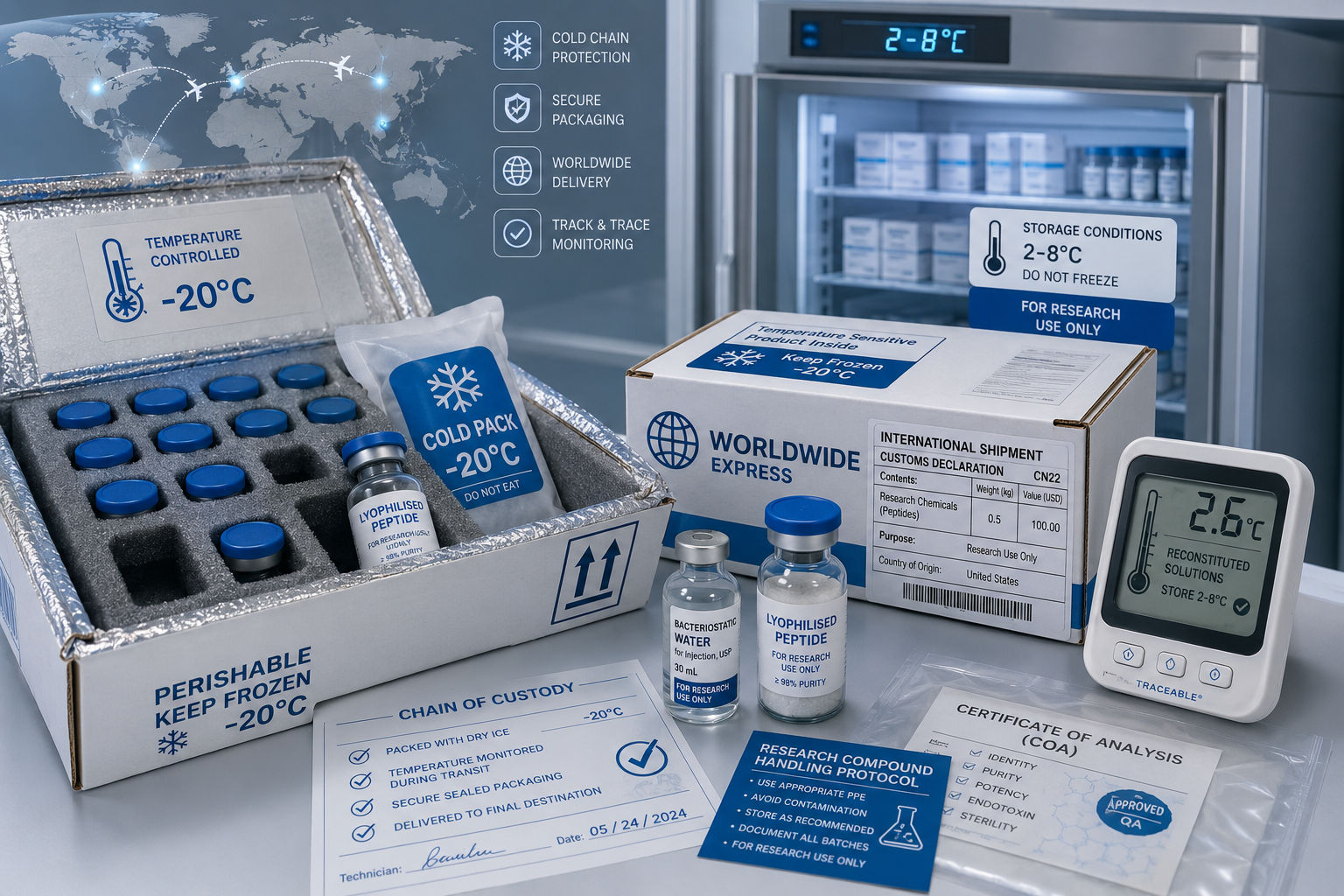
Upon receiving lyophilised (freeze-dried) peptide vials, transfer them immediately to a freezer maintained at -20°C. Do not leave vials at room temperature or in refrigerator conditions (2-8°C), as this accelerates degradation even in lyophilised form.
Store vials in their original sealed containers until ready for use. The lyophilisation process removes water content, creating a stable powder, but exposure to humidity during storage can introduce moisture that degrades the peptide structure.
Long-term storage of unreconstituted peptides:
Storage after reconstitution:
Once reconstituted with bacteriostatic water, peptides require refrigeration at 2-8°C and have significantly shorter stability windows:
Never freeze reconstituted peptide solutions. Freezing causes ice crystal formation that disrupts peptide structure and can lead to aggregation or precipitation when thawed.
Reconstitution best practices:
Use bacteriostatic water rather than sterile water for reconstitution. The 0.9% benzyl alcohol in bacteriostatic water prevents bacterial growth, extending the usable life of reconstituted solutions from 24 hours (sterile water) to 14-28 days.
Allow lyophilised vials to reach room temperature before opening to prevent condensation from forming on the cold powder. Add bacteriostatic water slowly down the inside wall of the vial—never directly onto the powder—to minimize mechanical stress on peptide bonds. Gently swirl (never shake or vortex) until fully dissolved.
Label reconstituted vials with the reconstitution date and calculated concentration. Calculate concentration as: (peptide amount in mg) ÷ (water volume in mL) = concentration in mg/mL.
For detailed reconstitution protocols, refer to the comprehensive laboratory guide on how to mix and store peptides, which provides step-by-step instructions for various peptide classes.
Storage conditions for specific compound classes:
Researchers purchasing high purity research peptides online frequently encounter pitfalls that compromise research quality, waste resources, or create compliance issues. Recognizing these common mistakes helps laboratories establish reliable sourcing protocols.
Mistake 1: Prioritizing price over purity verification
Selecting suppliers based solely on lowest price often results in receiving lower-purity compounds (95-98%) marketed as high-purity products. The 2-5% purity difference translates to significant variations in actual peptide content, requiring dose adjustments that introduce experimental error.
Solution: Verify that the supplier provides batch-specific Certificates of Analysis with HPLC chromatograms showing ≥99.8% purity. Calculate the effective cost per milligram of pure peptide, not just the vial price.
Mistake 2: Failing to verify Certificate of Analysis authenticity
Some vendors provide generic or fabricated CoAs that appear legitimate but contain no batch-specific data. Researchers who accept these documents without verification may use compounds of unknown purity or identity.
Solution: Cross-reference the batch number on your vial with the batch number on the CoA. Contact the listed testing laboratory directly to confirm the certificate’s authenticity. Legitimate laboratories maintain records and can verify certificates when provided with batch numbers.
Mistake 3: Ordering incorrect molecular forms
Many peptides exist in multiple forms with different research applications. For example, BPC-157 is available as both the acetate salt and the free acid form, which have different molecular weights and require different dose calculations.
Solution: Verify the exact molecular form specified in your research protocol before ordering. Confirm that the supplier’s product description matches your requirements, including salt form, sequence modifications, and any structural variations.
Mistake 4: Inadequate storage preparation
Ordering peptides without appropriate storage infrastructure leads to degradation before use. Peptides delivered to laboratories lacking -20°C freezer capacity or proper refrigeration for reconstituted solutions lose potency and purity.
Solution: Ensure your laboratory has -20°C freezer capacity for long-term storage and 2-8°C refrigeration for reconstituted solutions before ordering. Prepare storage locations in advance to allow immediate proper storage upon delivery.
Mistake 5: Ordering excessive quantities
Purchasing large quantities to reduce per-unit costs can result in waste if the peptide degrades before use. Even properly stored lyophilised peptides have finite stability windows (24-36 months), and reconstituted solutions remain viable for only 14-28 days.
Solution: Calculate your actual research requirements based on protocol duration and dosing frequency. Order quantities that will be used within the stability window, accounting for both lyophilised storage time and post-reconstitution usage period.
Mistake 6: Ignoring research-use-only compliance
Purchasing from vendors that market peptides with therapeutic claims or consumer wellness language creates compliance risks and suggests the supplier does not maintain proper quality standards.
Solution: Select suppliers that clearly designate products as research-use-only, provide professional scientific documentation, and avoid therapeutic marketing language. Verify that the supplier implements buyer qualification processes.
Mistake 7: Neglecting reconstitution planning
Ordering peptides without bacteriostatic water, appropriate syringes, or reconstitution protocols leads to improper preparation that degrades peptide quality or creates safety hazards.
Solution: Order bacteriostatic water simultaneously with peptides if your laboratory does not maintain stock. Review reconstitution protocols before the peptide arrives to ensure you have all necessary supplies and understand proper technique.
Mistake 8: Accepting unclear product specifications
Vague product descriptions lacking molecular weight, sequence information, or storage requirements indicate suppliers with inadequate quality control or scientific expertise.
Solution: Only purchase from suppliers providing complete technical specifications for each compound, including amino acid sequence, molecular weight, recommended storage conditions, and research applications. Sempica provides comprehensive technical documentation for all 200+ compounds in its catalogue.
Research peptides are legally available to qualified research professionals, including academic researchers, institutional laboratories, biotechnology companies, and independent research facilities conducting legitimate scientific investigation. The qualification framework focuses on intended use rather than specific credentials.
Qualified purchaser categories:
Academic researchers: Faculty members, postdoctoral researchers, and graduate students affiliated with universities or research institutions conducting peptide-related research. Institutional affiliation provides verification of legitimate research intent.
Commercial research laboratories: Biotechnology companies, pharmaceutical research divisions, and contract research organizations conducting preclinical studies, assay development, or compound screening.
Independent research facilities: Private laboratories conducting scientific research outside academic or commercial settings, provided they maintain proper documentation of research activities and comply with research-use-only requirements.
Institutional procurement departments: University purchasing offices or research supply coordinators ordering on behalf of qualified researchers within their institutions.
Verification requirements:
Professional suppliers implement verification processes to ensure compounds reach qualified research environments. These processes vary by supplier but typically include:
Sempica Healthcare maintains verification protocols to ensure compliance with research-use-only standards while providing streamlined access for qualified professionals. The platform serves researchers across 150+ countries, accommodating various institutional structures and verification methods.
Who cannot legally purchase research peptides:
Individuals seeking peptides for personal use, self-administration, or therapeutic purposes cannot legally purchase research compounds. Suppliers marketing to consumers for wellness, anti-aging, or performance enhancement purposes operate outside legal and ethical boundaries.
Resellers intending to repackage or redistribute peptides as therapeutic products without appropriate pharmaceutical licensing violate regulations governing drug manufacturing and distribution.
Verification best practices for researchers:
When establishing an account with a new supplier, prepare documentation demonstrating your research affiliation:
Legitimate suppliers use this information to verify research intent, not to create barriers to access. The verification process protects both the supplier and the research community by ensuring compounds are used appropriately.
For researchers at institutions without formal procurement systems, direct communication with supplier customer support can establish verification through alternative documentation methods. Sempica’s support team at info@sempicahealthcare.ch assists researchers in completing verification requirements appropriate to their institutional context.
Third-party testing represents the gold standard for verifying research peptide purity, identity, and quality. Suppliers that employ independent laboratories for compound verification demonstrate commitment to transparency and scientific rigor that distinguishes professional suppliers from unverified vendors.
What third-party testing entails:
Independent testing means the supplier sends samples from each synthesis batch to an accredited analytical laboratory with no financial relationship to the manufacturer. The testing laboratory performs analytical techniques including:
High-Performance Liquid Chromatography (HPLC): Separates peptide components and quantifies purity by measuring the area under the chromatogram peak corresponding to the target peptide relative to total peak area.
Mass Spectrometry (MS): Confirms molecular weight matches the expected value for the target peptide sequence, verifying correct synthesis and absence of significant truncations or additions.
Nuclear Magnetic Resonance (NMR): Provides detailed structural information confirming the correct amino acid sequence and detecting any structural abnormalities (used for complex or novel peptides).
Amino Acid Analysis: Quantifies the amino acid composition of the peptide, confirming the correct ratio of amino acids in the sequence.
The testing laboratory issues a Certificate of Analysis documenting the results of these analyses, including the specific batch tested, testing date, methodology used, and quantitative results.
Why third-party testing matters:
Suppliers that conduct only in-house testing face inherent conflicts of interest—they have financial incentives to report favorable results even when purity falls short of standards. Third-party testing eliminates this conflict by placing verification in the hands of independent professionals with no stake in the outcome.
For researchers, third-party verification provides confidence that the compounds they use in experiments meet stated specifications. This confidence is essential for:
Identifying suppliers with legitimate third-party testing:
Legitimate third-party testing is characterized by:
Sempica Healthcare exemplifies this standard, providing batch-specific Certificates of Analysis from independent accredited laboratories for all compounds. Each certificate includes complete HPLC chromatograms and mass spectrometry data, allowing researchers to verify purity before use.
Verifying third-party testing claims:
To confirm a supplier’s third-party testing claims:
Suppliers that refuse to provide CoAs before purchase, provide only generic certificates, or cannot name the testing laboratory likely do not employ genuine third-party verification.
For researchers requiring specific compounds for GLP-1/GIP multi-pathway metabolic research, third-party verification becomes especially critical, as these complex modified peptides require sophisticated analytical techniques to confirm correct synthesis and acylation.
Peptide degradation during shipping occurs when temperature control fails, packaging is compromised, or transit times exceed stability windows. Recognizing degradation and understanding supplier policies for replacement ensures research quality is maintained.
Signs of peptide degradation:
Visual indicators: Lyophilised peptides should appear as white to off-white powder. Discoloration (yellowing, browning), clumping, or moisture inside the vial indicates potential degradation or contamination.
Reconstitution behavior: Degraded peptides may not dissolve completely, leaving visible particles or cloudiness in solution. Properly synthesized peptides should dissolve completely to form clear solutions (some peptides may have slight opalescence, which is normal).
Analytical indicators: If your laboratory has analytical capabilities, HPLC analysis of a degraded peptide will show reduced purity, with additional peaks representing degradation products. Mass spectrometry may show molecular weight variations indicating peptide bond cleavage.
Functional indicators: In biological assays, degraded peptides show reduced or absent activity compared to expected responses based on published data or previous experiments with the same compound.
Causes of shipping-related degradation:
Supplier policies for degraded shipments:
Professional suppliers maintain replacement policies for compounds that arrive degraded or fail to meet specifications. Sempica Healthcare’s policy includes:
Preventing degradation during shipping:
What to do if degradation is suspected:
Legitimate suppliers prioritize customer satisfaction and research quality, recognizing that degraded compounds waste researchers’ time and compromise experimental outcomes. Sempica’s customer support team responds promptly to degradation concerns and implements replacement protocols to minimize research disruption.
For researchers working with particularly sensitive compounds like NAD+ for anti-aging research, extra vigilance regarding shipping conditions and immediate proper storage becomes essential to maintaining compound integrity.
Research peptides serve both academic institutions and private laboratories, but procurement processes, verification requirements, and usage contexts differ between these environments. Understanding these distinctions helps researchers navigate purchasing protocols appropriate to their institutional setting.
Academic institution procurement:
Universities and research institutions typically maintain centralized procurement systems that standardize purchasing across departments. Research peptide orders often flow through:
Institutional purchasing offices: Central procurement departments that process purchase orders, verify vendor credentials, and manage payment processing. Researchers submit requisitions through internal systems, and purchasing offices execute orders with approved suppliers.
Laboratory supply accounts: Established accounts with scientific suppliers that allow individual laboratories to order directly while billing to institutional accounts. These arrangements streamline ordering for frequently used supplies.
Grant-funded purchases: Research grants often specify allowable vendors or require competitive bidding for purchases above certain thresholds. Peptide purchases charged to grant accounts must comply with funding agency requirements.
Verification for academic researchers: Institutional email addresses (.edu, .ac.uk, etc.) typically provide sufficient verification of academic affiliation. Suppliers may request additional documentation such as faculty appointment letters or laboratory affiliation confirmation for first-time orders.
Private laboratory procurement:
Independent research facilities, biotechnology companies, and contract research organizations typically maintain more flexible procurement processes:
Direct purchasing: Private laboratories often purchase directly from suppliers without centralized procurement intermediaries, allowing faster order processing and delivery.
Corporate accounts: Established research companies maintain corporate accounts with suppliers, providing streamlined ordering and consolidated billing.
Project-based purchasing: Private laboratories may purchase peptides for specific client projects or internal research programs, with procurement tied to project budgets and timelines.
Verification for private laboratories: Private researchers typically verify credentials through business registration documentation, research facility descriptions, or professional credentials of laboratory directors.
Regulatory and compliance considerations:
Both academic and private laboratories must maintain compliance with research-use-only requirements, but oversight mechanisms differ:
Academic institutions: Institutional Review Boards (IRBs) and Institutional Animal Care and Use Committees (IACUCs) oversee research protocols involving human subjects or animals. Peptide purchases for these protocols require protocol approval documentation.
Private laboratories: Private facilities conducting contract research for pharmaceutical companies may operate under Good Laboratory Practice (GLP) regulations, requiring additional documentation and quality control measures for all research materials.
Advantages of each environment:
Academic advantages:
Private laboratory advantages:
Sempica Healthcare serves both academic and private research environments, accommodating various procurement processes and verification requirements. The platform’s flexibility allows researchers to establish accounts appropriate to their institutional context while maintaining consistent quality standards across all customer categories.
For researchers at institutions exploring endocrine growth hormone research compounds, understanding institutional procurement requirements before initiating orders prevents delays and ensures compliance with institutional policies.
Distinguishing legitimate research peptide suppliers from unverified vendors requires evaluating multiple credibility indicators that collectively demonstrate scientific professionalism, quality commitment, and regulatory compliance. No single factor provides definitive verification, but the combination of indicators reveals supplier legitimacy.
Primary legitimacy indicators:
1. Batch-specific Certificates of Analysis: Legitimate suppliers provide CoAs for every batch with HPLC chromatograms, mass spectrometry data, and independent laboratory identification. Generic certificates or refusal to provide CoAs before purchase indicates questionable quality control.
2. Research-use-only compliance: Professional suppliers maintain clear disclaimers that products are not for human consumption and implement verification processes. Vendors marketing peptides with therapeutic claims or consumer wellness language operate outside professional standards.
3. Technical product specifications: Legitimate suppliers provide comprehensive technical data for each compound, including amino acid sequence, molecular weight, storage requirements, and research applications. Vague descriptions lacking scientific detail suggest inadequate expertise.
4. Professional digital infrastructure: Credible suppliers operate through secure, professionally designed websites with proper business registration, privacy policies, and terms of service. Amateur websites with poor design, spelling errors, or security warnings indicate unprofessional operations.
5. Transparent contact information: Legitimate suppliers provide multiple contact methods (email, phone, physical address) and respond promptly to inquiries with scientifically informed answers. Vendors hiding behind generic contact forms or providing only email addresses raise concerns.
6. Established business presence: Professional suppliers maintain verifiable business registration, operate from identifiable physical locations, and have established track records. Newly created websites with no business history or anonymous registration warrant caution.
7. Scientific expertise in communications: Legitimate suppliers employ staff with scientific knowledge who can discuss compound mechanisms, research applications, and technical specifications. Vendors unable to answer basic scientific questions lack credibility.
8. Appropriate pricing: Professional suppliers price compounds based on synthesis complexity and purity standards. Prices significantly below market rates (30-50% lower than established suppliers) often indicate lower purity, smaller quantities, or counterfeit products.
Secondary verification methods:
Independent reviews: Search for independent reviews from research communities, scientific forums, or laboratory supply review platforms. Be cautious of reviews on the supplier’s own website, which may be curated or fabricated.
Professional affiliations: Legitimate suppliers may hold memberships in scientific supply organizations or maintain relationships with research institutions. Verify claimed affiliations through independent sources.
Publication citations: Some suppliers are cited in published research papers when authors disclose compound sources. Search scientific databases for papers citing the supplier as a compound source.
Laboratory verification: Contact the testing laboratory listed on Certificates of Analysis to confirm they performed the analysis and that the certificate is authentic.
Red flags indicating illegitimate vendors:
Verification checklist for new suppliers:
Before purchasing from an unfamiliar supplier, verify:
Sempica Healthcare meets all legitimacy indicators, operating as a transparent, professionally managed research compound supplier with comprehensive quality documentation, independent third-party testing, and clear research-use-only compliance. The platform’s commitment to scientific standards and researcher support establishes it as a reliable source for high purity research peptides online.
For researchers requiring specialized compounds for neuro-circadian research, selecting a legitimate supplier with proper quality documentation becomes especially critical, as these compounds require precise synthesis and verification to ensure correct receptor interactions.
What is the minimum purity acceptable for research peptides?
Research peptides should meet a minimum 99.8% purity standard for rigorous scientific investigation. Lower purity grades (95-98%) may suffice for preliminary screening studies, but mechanistic research, dose-response protocols, and comparative studies require ≥99.8% purity to eliminate confounding variables from synthesis by-products and impurities.
How long do research peptides remain stable after reconstitution?
Reconstituted peptides stored at 2-8°C remain stable for 14-28 days depending on the specific compound and diluent used. Standard peptides reconstituted with bacteriostatic water maintain stability for 14-21 days, while modified peptides like Semaglutide and Tirzepatide remain stable for up to 28 days. Never freeze reconstituted solutions, as this causes structural degradation.
Can I purchase research peptides without institutional affiliation?
Independent researchers can purchase research peptides if they can demonstrate legitimate research intent and maintain compliance with research-use-only requirements. Suppliers may request documentation of research activities, laboratory facilities, or professional credentials to verify that compounds will be used appropriately in research settings rather than for personal consumption.
What is the difference between bacteriostatic water and sterile water for reconstitution?
Bacteriostatic water contains 0.9% benzyl alcohol as a preservative, preventing bacterial growth and extending reconstituted peptide stability to 14-28 days when refrigerated. Sterile water contains no preservative and requires single-use application within 24 hours of reconstitution. Bacteriostatic water is the standard diluent for research peptides requiring multiple-dose protocols.
How do I calculate the correct concentration after reconstitution?
Calculate concentration by dividing the peptide amount in milligrams by the volume of water added in milliliters: Concentration (mg/mL) = Peptide amount (mg) ÷ Water volume (mL). For example, adding 2 mL of bacteriostatic water to a 10 mg vial yields a concentration of 5 mg/mL. Label reconstituted vials with the concentration and reconstitution date.
Are research peptides the same as pharmaceutical peptides?
Research peptides are chemically identical to pharmaceutical peptides in terms of molecular structure and sequence, but they differ in regulatory status and intended use. Research peptides are manufactured for laboratory investigation and are not approved for human therapeutic use. Pharmaceutical peptides undergo extensive regulatory approval processes and are manufactured under pharmaceutical-grade conditions for medical use.
What should I do if my peptide vial arrives at room temperature?
Contact the supplier immediately if peptides arrive at room temperature, as temperature excursions can cause degradation. Document the condition with photographs and request replacement. Most lyophilised peptides tolerate brief temperature excursions (24-48 hours at room temperature) without significant degradation, but extended exposure compromises quality. Store the vial at -20°C and await supplier guidance before use.
Can I transfer peptide powder to a different vial?
Transferring lyophilised peptide powder to different vials is not recommended, as this introduces contamination risk, moisture exposure, and loss of material through transfer inefficiency. Peptides should remain in their original sealed vials until reconstitution. If smaller aliquots are needed, reconstitute the entire vial and divide the solution into sterile vials for storage.
How do I verify that my peptide matches the Certificate of Analysis?
Verify that the batch number printed on your vial matches the batch number on the Certificate of Analysis. The CoA should include HPLC chromatogram data showing purity ≥99.8% and mass spectrometry data confirming the correct molecular weight. Contact the testing laboratory listed on the CoA to confirm they performed the analysis for that specific batch.
What is the shelf life of unopened lyophilised peptides?
Unopened lyophilised peptides stored at -20°C remain stable for 24-36 months from the manufacturing date when kept in sealed vials protected from light and moisture. The specific stability duration varies by compound, with some peptides (particularly those with unusual amino acids or modifications) having shorter stability windows. Check the expiration date provided by the supplier.
Do research peptides require special disposal procedures?
Research peptides should be disposed of according to institutional chemical waste protocols. Small quantities of dilute peptide solutions can typically be neutralized and disposed of through laboratory sink drains with copious water, but concentrated solutions and lyophilised powders should be collected as chemical waste for proper disposal. Consult your institution’s environmental health and safety office for specific requirements.
Can I use research peptides in animal studies?
Research peptides can be used in animal studies conducted under appropriate Institutional Animal Care and Use Committee (IACUC) approval. The research protocol must specify the peptide source, purity, and dosing calculations. Ensure that the peptide purity and quality documentation meet institutional requirements for animal research materials.
High purity research peptides online represent essential tools for scientific investigation across metabolic research, longevity studies, cellular regeneration, and numerous other research domains. The 99.8% purity standard, verified through independent third-party testing and documented in batch-specific Certificates of Analysis, ensures that experimental results reflect true compound activity rather than artifacts from synthesis impurities.
Selecting legitimate suppliers requires evaluating multiple credibility indicators: comprehensive technical specifications, transparent testing protocols, clear research-use-only compliance, professional infrastructure, and responsive scientific support. Sempica Healthcare exemplifies these standards, providing researchers worldwide with access to over 200 high-purity compounds manufactured to consistent quality specifications and supported by complete analytical documentation.
Proper storage protocols—maintaining lyophilised peptides at -20°C and reconstituted solutions at 2-8°C—preserve compound integrity from delivery through experimental use. Understanding reconstitution procedures, concentration calculations, and stability windows ensures that peptides maintain their research-grade quality throughout multi-dose protocols.
The legal framework for research peptides permits purchase by qualified research professionals when compounds are designated for laboratory use rather than human consumption. This distinction requires both suppliers and researchers to maintain clear documentation of research intent and compliance with research-use-only requirements.
For researchers establishing new peptide sourcing protocols, prioritize suppliers that provide verifiable purity documentation, maintain transparent business practices, and demonstrate scientific expertise in their communications. The investment in high-purity compounds from legitimate sources yields returns through reproducible experimental results, efficient resource utilization, and confidence in research outcomes.
Next steps for researchers:
The research peptide landscape continues to expand as new compounds emerge from pharmaceutical development pipelines and enter the research supply market. Maintaining relationships with suppliers that prioritize quality, transparency, and scientific rigor ensures that your laboratory has access to the high-purity compounds necessary for advancing scientific knowledge in 2026 and beyond.
SEO Meta Title: High Purity Research Peptides Online: 2026 Buyer’s Guide
Semaglutide vs tirzepatide which is better for
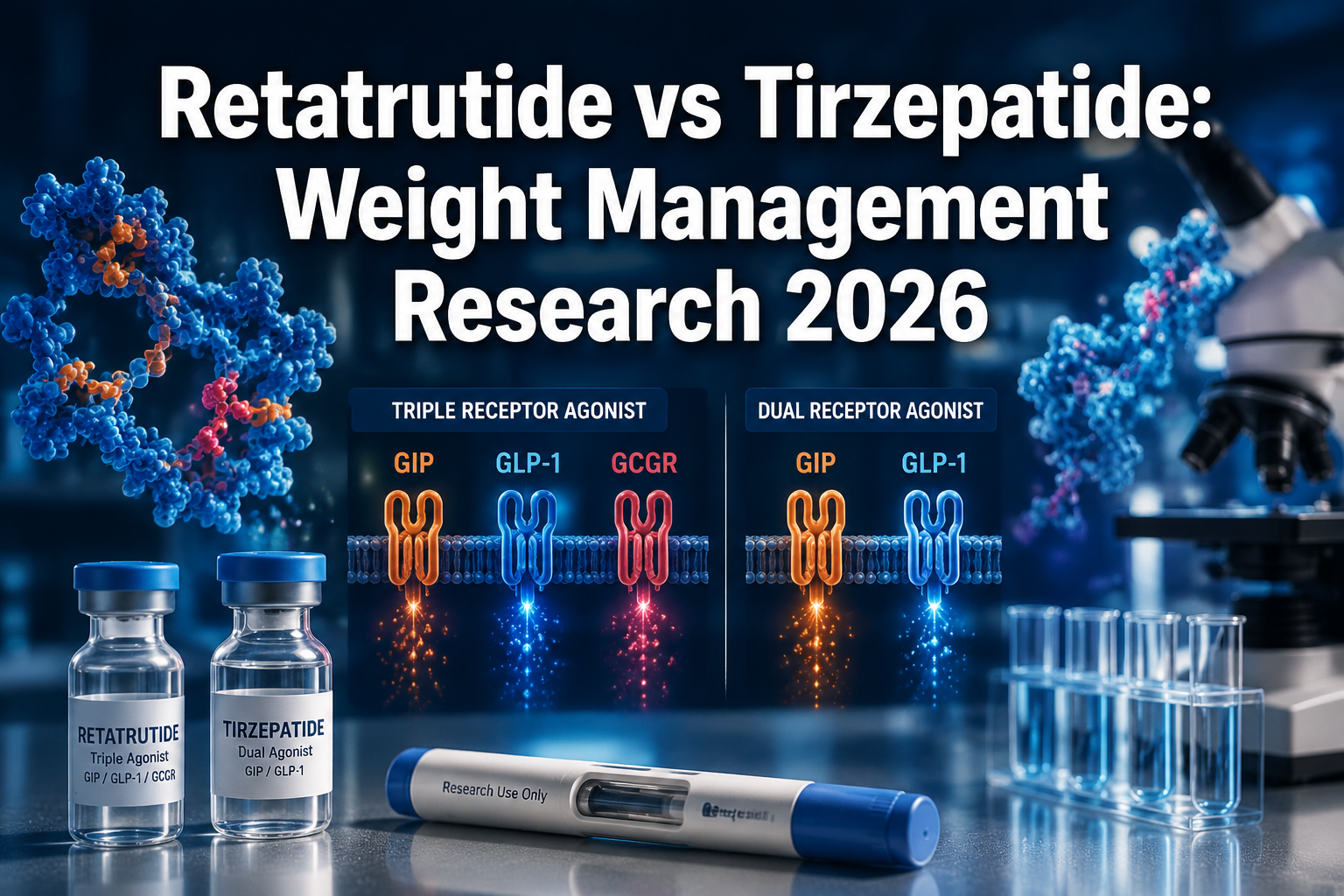
Confused on Retatrutide vs Tirzepatide for weight
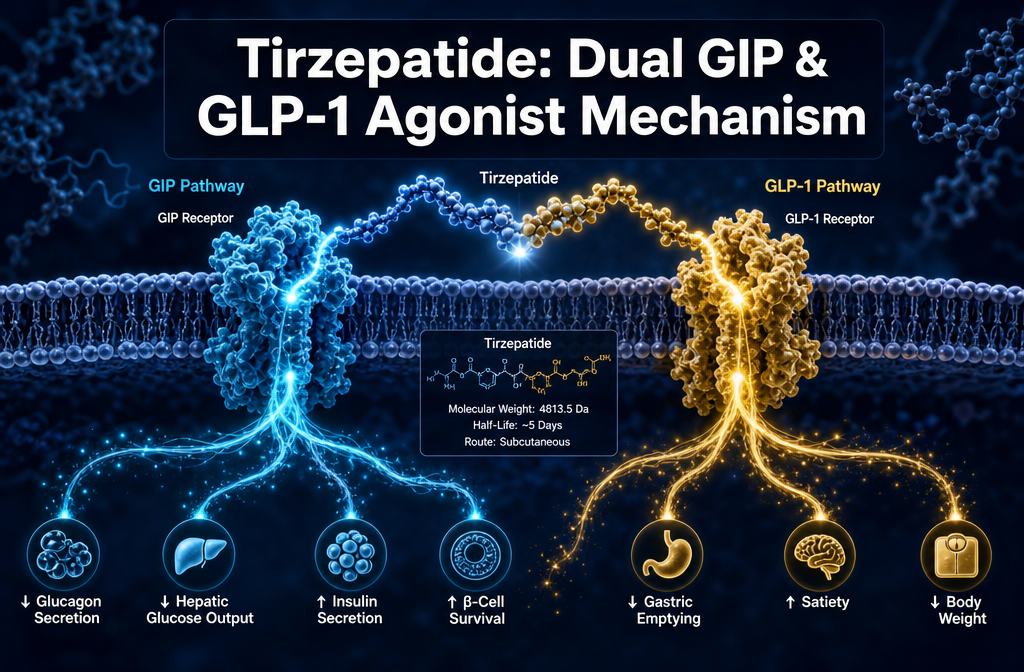
What is Tirzepatide dual GIP GLP-1 agonist