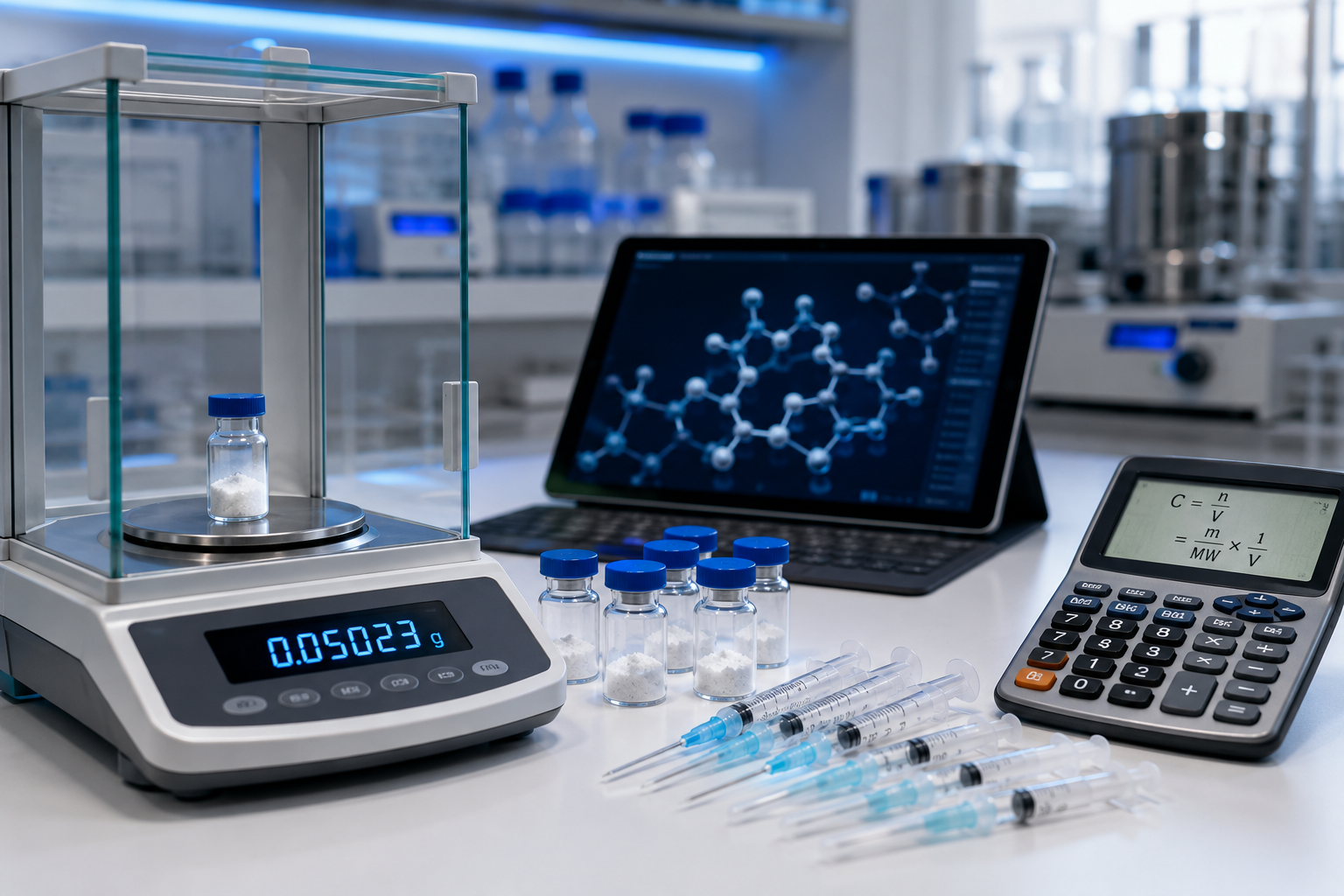
How to calculate peptide dosage for peptide
Unsure of How much of Ozempic of

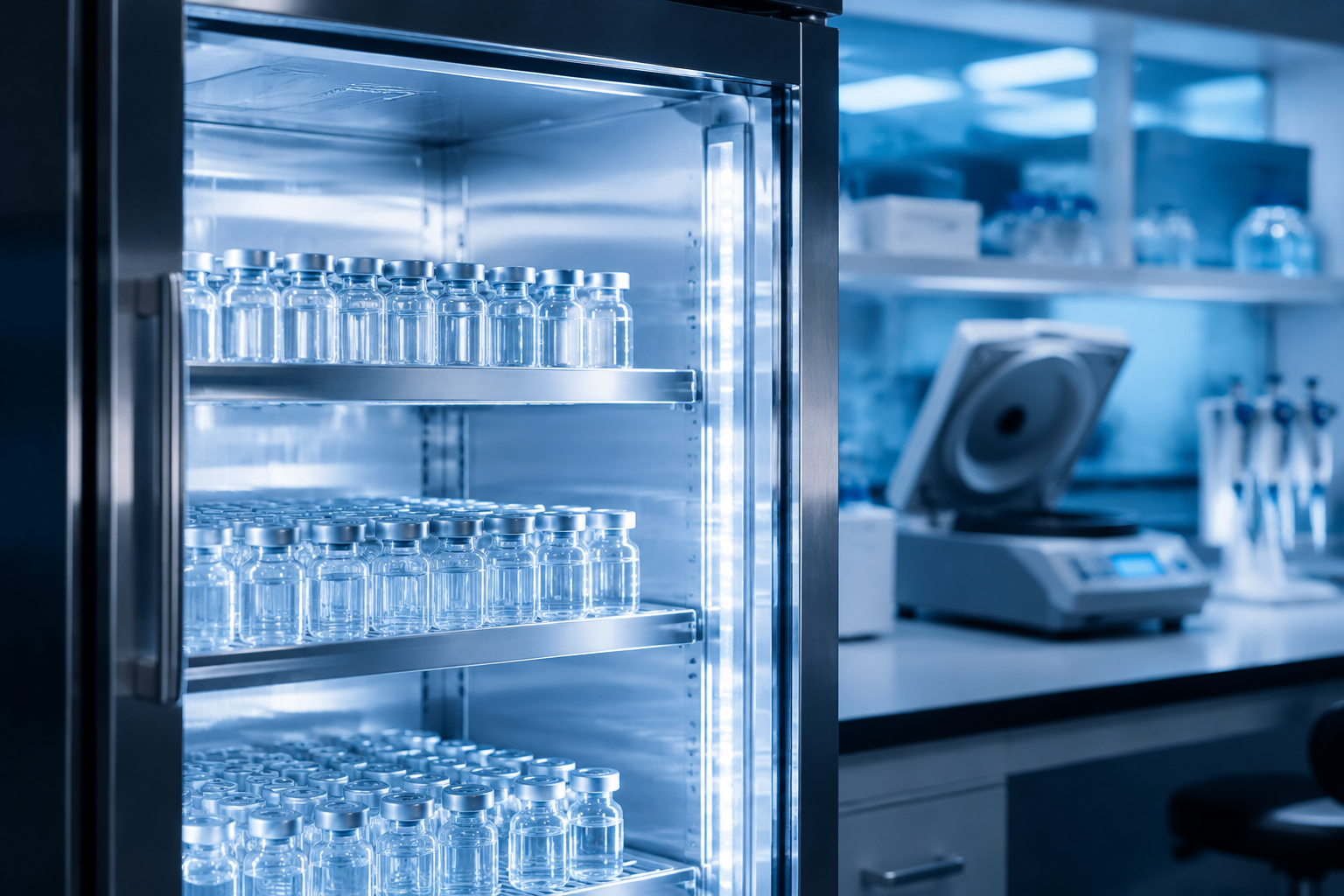
Quick Answer: Reconstituted peptides last between 28 and 30 days in the fridge when stored at 2–8°C and prepared using bacteriostatic water. If sterile water is used instead, the window drops sharply to 24 hours. Stability varies by compound, and several factors — including temperature consistency, diluent choice, and handling technique — determine whether a solution remains viable for the full storage period.
The standard guideline for reconstituted peptide storage is 28 to 30 days at 2–8°C, provided bacteriostatic water was used as the diluent [1][2]. This window is widely cited across peptide research literature and reflects the antimicrobial protection that 0.9% benzyl alcohol provides against bacterial growth in the solution.
When sterile water is used, no such protection exists. A solution prepared with sterile water is considered viable for single-use applications only, with a maximum hold time of 24 hours under refrigeration [3][4]. For any research protocol requiring repeated sampling from the same vial, bacteriostatic water is the appropriate diluent.
Decision rule: Use bacteriostatic water for multi-use vials with a 28–30 day window. Use sterile water only when the full volume will be consumed in a single session.
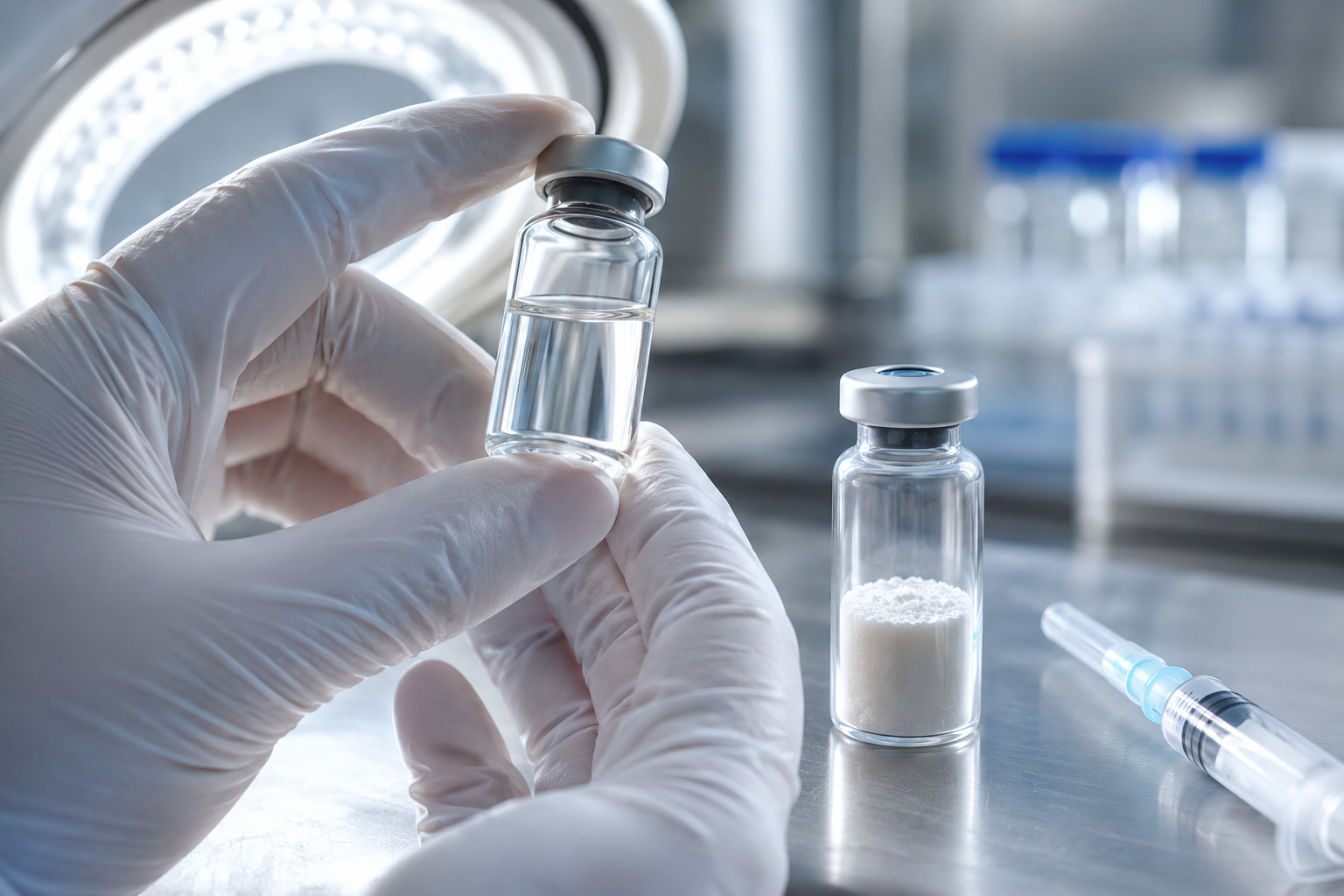
Yes, reconstituted peptides can degrade in the refrigerator, even under correct storage conditions. Refrigeration at 2–8°C significantly slows, but does not stop, the chemical processes that break down peptide bonds — including hydrolysis, oxidation, and aggregation [5][7].
The rate of degradation depends on several variables: the specific amino acid sequence, the pH of the reconstituted solution, exposure to light, and how consistently the temperature is maintained. A peptide solution stored at a stable 4°C in a dedicated laboratory refrigerator will retain its integrity far longer than one stored in a domestic fridge subject to repeated door openings and temperature swings.
Beyond the 28–30 day mark, even a visually clear solution may have lost measurable potency. For research requiring precise compound concentrations, solutions approaching or exceeding this window should be discarded and freshly prepared.
Storing a reconstituted peptide solution beyond its recommended window exposes the research to compounding variables that reduce confidence in results. Hydrolysis — the breaking of peptide bonds by water molecules — continues gradually at refrigerator temperatures [7]. Oxidation of susceptible amino acid residues (methionine, cysteine, tryptophan) can alter the compound’s binding affinity and biological activity in research models [5].
Beyond chemical degradation, microbial contamination becomes a concern as benzyl alcohol’s preservative efficacy diminishes over time [3]. A solution that has been stored for six weeks, for example, may harbour bacterial growth even if it appears visually clear.
Common mistake: Assuming a solution is still viable because it looks unchanged. Visual clarity is not a reliable indicator of peptide integrity beyond the recommended storage window.
A degraded peptide solution often presents with one or more observable changes, though degradation is not always visible [2][8]:
If any of these signs are present, the solution should be discarded. Continuing to use a degraded solution introduces uncontrolled variables into research data and compromises the integrity of results.
Temperature is the single most influential factor in determining how long reconstituted peptides last in the fridge. Peptide degradation follows Arrhenius kinetics — meaning that even modest temperature increases substantially accelerate the rate of chemical breakdown [5][7].
At 2–8°C, most peptide solutions remain stable for the full 28–30 day window. At room temperature (20–25°C), the same solution may degrade within hours to days, depending on the compound [6]. At 37°C (body temperature), degradation is rapid and can render a solution unusable within hours.
This is why temperature consistency matters as much as the target temperature itself. A laboratory refrigerator that cycles between 2°C and 12°C due to frequent door openings provides meaningfully worse stability than one held at a constant 4°C. Dedicated laboratory refrigerators with minimal access are preferable to shared or domestic units for this reason.
| Storage Condition | Approximate Stability Window |
|---|---|
| -20°C (lyophilised powder) | Until expiry date (typically 2+ years) |
| 2–8°C with bacteriostatic water | 28–30 days |
| 2–8°C with sterile water | Up to 24 hours |
| Room temperature (20–25°C) | Hours to a few days (compound-dependent) |
| 37°C | Hours or less |
Note: These are general estimates. Specific compounds may vary. Always consult the manufacturer’s Certificate of Analysis and compound-specific storage guidance.
Correct storage technique is as important as the storage environment itself. The following practices are standard for maintaining reconstituted peptide integrity throughout the research window [1][3][4]:
For a detailed walkthrough of reconstitution technique, Sempica’s comprehensive laboratory guide on how to mix and store peptides covers the full protocol in depth.
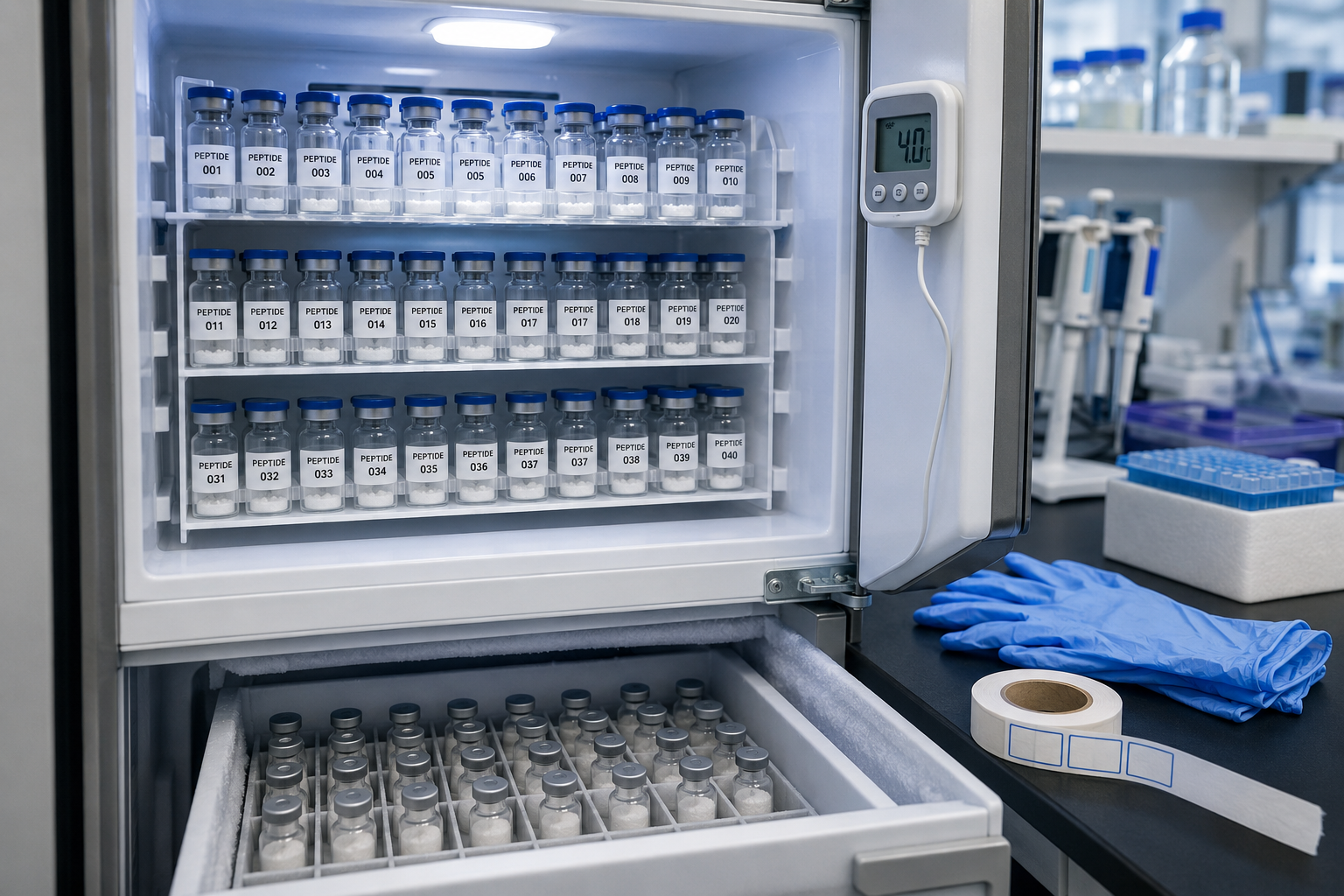
Freezing a reconstituted peptide solution is not recommended and should be avoided in standard research protocols [2][5]. When a solution freezes and thaws, ice crystal formation can mechanically disrupt peptide chains, and the repeated concentration-dilution cycles that occur at the ice-liquid interface accelerate both aggregation and hydrolysis.
The correct approach is to keep lyophilised powder frozen at -20°C until the point of reconstitution, then move the reconstituted solution to 2–8°C refrigeration for the duration of its use window. If a research protocol requires more compound than can be used within 28–30 days, the correct strategy is to reconstitute in smaller batches rather than freeze the surplus solution.
Edge case: Some specialised research facilities with access to ultra-low temperature storage (-80°C) and cryoprotectant additives may explore extended frozen storage of reconstituted solutions. This falls outside standard protocols and requires compound-specific validation data before implementation.
Yes, peptide stability after reconstitution varies considerably based on amino acid composition, molecular weight, and structural features [7][8]. Peptides containing oxidation-prone residues (methionine, cysteine, tryptophan) or those with complex tertiary structures tend to be less stable in solution than simpler linear sequences.
Among commonly researched compounds:
Researchers working with compounds from Sempica’s metabolic and GLP/GIP multi-pathway research range should always cross-reference the compound-specific Certificate of Analysis for storage guidance, as structural modifications (such as acylation in semaglutide or tirzepatide) can influence solution stability beyond what general guidelines cover.
Several distinct chemical mechanisms degrade reconstituted peptides during refrigerated storage [5][7]:
Hydrolysis is the primary degradation pathway. Water molecules cleave peptide bonds, progressively reducing the average chain length and altering the compound’s receptor-binding properties. This process is temperature-dependent but continues at refrigerator temperatures.
Oxidation affects peptides containing methionine, cysteine, or tryptophan residues. Dissolved oxygen in the reconstituted solution reacts with these residues, altering their electronic structure and reducing binding affinity. Minimising headspace in the vial and avoiding unnecessary exposure to air during reconstitution reduces this risk.
Aggregation occurs when peptide chains misfold and associate with one another, forming larger structures that are biologically inactive. Mechanical agitation (shaking, vortexing) and temperature fluctuations both promote aggregation.
Microbial contamination introduces enzymatic degradation. Proteases produced by contaminating bacteria can cleave peptide bonds far more rapidly than abiotic hydrolysis. Bacteriostatic water’s benzyl alcohol content suppresses this, but sterile technique during reconstitution and vial access remains essential.
Contamination risk is present at every stage from reconstitution to final use. Implementing consistent sterile technique eliminates the majority of this risk [3][4]:
Researchers sourcing compounds from Sempica can find additional guidance on research protocols through the Sempica FAQs page, which addresses handling, storage, and research-use compliance questions.
Manufacturer storage recommendations are the most authoritative reference point for any specific compound and should take precedence over general guidelines where they differ [7]. Across reputable research compound suppliers, the consensus guidance aligns with the following framework:
Sempica provides a Certificate of Analysis (CoA) for every compound in its catalogue, independently verified through third-party testing to a 99.8% purity standard. The CoA includes compound-specific storage parameters that should be the first reference point for any research protocol. Researchers can review available compounds and their specifications directly through the Sempica research compound catalogue.
For those working with stacks and multi-compound formulations — such as the KLOW Stack combining GHK-Cu, BPC-157, TB-500, and KPV — the storage window for the reconstituted blend should be governed by the least stable component in the formulation.
Research-grade peptides and pharmaceutical-grade peptides share the same fundamental chemistry, so the underlying degradation mechanisms are identical. The practical differences in storage guidance arise from context, formulation, and regulatory framework rather than from the peptide itself [7][8].
Pharmaceutical peptide formulations approved for clinical use often contain additional stabilising excipients — buffers, antioxidants, tonicity agents — that extend solution stability beyond what a simple peptide-in-bacteriostatic-water preparation achieves. These formulations are also subject to rigorous stability testing under ICH guidelines, producing precise, validated shelf-life data.
Research-grade peptides, by contrast, are supplied as lyophilised powder without formulation excipients. The 28–30 day guideline for refrigerated reconstituted solutions is a conservative, evidence-informed estimate rather than a formally validated pharmaceutical shelf-life claim. This distinction underscores why research protocols should treat the 28-day window as a firm upper limit rather than a target to approach.
Researchers exploring growth hormone secretagogues such as Tesamorelin or compounds from the endocrine and growth hormone research range should pay particular attention to compound-specific storage data, as peptides with complex structural modifications may have narrower stability windows than simpler sequences.
How long do reconstituted peptides last in the fridge if I use bacteriostatic water?
Up to 28–30 days at 2–8°C. The 0.9% benzyl alcohol in bacteriostatic water inhibits bacterial growth and preserves the solution for this window, provided sterile technique is used throughout [1][2].
How long do reconstituted peptides last in the fridge if I use sterile water?
No more than 24 hours. Sterile water contains no preservative, so the solution is only appropriate for single-use applications [3][4].
Can I extend the storage life of a reconstituted peptide by adding more bacteriostatic water?
No. Diluting the solution further does not extend its stability and will alter the concentration, introducing errors into dosing calculations for research protocols.
Is it safe to use a reconstituted peptide that has been in the fridge for 35 days?
This falls outside the standard 28–30 day guideline. Even if the solution appears clear, chemical degradation will have progressed beyond the validated window. For research requiring reproducible results, the solution should be discarded and freshly prepared.
Why should I never freeze a reconstituted peptide solution?
Freeze-thaw cycles cause ice crystal formation that mechanically disrupts peptide chains, and the concentration changes at the ice-liquid interface accelerate hydrolysis and aggregation. Lyophilised powder should be frozen; reconstituted solutions should not [2][5].
Does the concentration of a reconstituted peptide affect how long it lasts?
Concentration has a limited effect on storage stability compared to temperature, diluent choice, and sterile technique. However, highly concentrated solutions may be more prone to aggregation over time.
How can I tell if a reconstituted peptide has degraded?
Look for cloudiness, visible particulates, colour change, or unusual odour. However, degradation is not always visually apparent, so the reconstitution date label is the most reliable guide [2][8].
Do all peptides have the same 28–30 day refrigerated storage window?
No. While 28–30 days is the standard guideline for most research peptides reconstituted with bacteriostatic water, specific compounds may have shorter windows depending on their amino acid composition and structural complexity [7]. Always consult the compound’s Certificate of Analysis.
What temperature should the fridge be set to for peptide storage?
Between 2°C and 8°C, with 4°C being the standard target. Avoid storing peptides near the door or in areas subject to temperature fluctuations.
Can I store reconstituted peptides in a standard kitchen fridge?
It is not ideal. Domestic refrigerators experience more frequent temperature fluctuations due to door openings and are not calibrated to laboratory standards. A dedicated laboratory or pharmaceutical-grade refrigerator is strongly preferred.
Does light exposure matter for refrigerated peptide storage?
Yes, for certain compounds. Peptides such as Melanotan II, NAD+, and GHK-Cu are sensitive to photodegradation. Store these in amber vials or wrapped in foil, even inside the refrigerator.
What should I do if I have more lyophilised peptide than I need for one reconstitution?
Keep the remaining lyophilised powder sealed and stored at -20°C. Reconstitute only what is needed for the current research window. This approach preserves compound integrity far more effectively than reconstituting a full vial and storing the surplus solution.
The question of how long reconstituted peptides last in the fridge has a clear, evidence-based answer: 28–30 days at 2–8°C when bacteriostatic water is used, and no more than 24 hours when sterile water is the diluent. These figures are not arbitrary — they reflect the antimicrobial protection provided by benzyl alcohol, the kinetics of peptide hydrolysis at refrigerator temperatures, and the practical limits of maintaining solution integrity without pharmaceutical-grade stabilising excipients.
For research professionals, the actionable steps are straightforward. Reconstitute with bacteriostatic water for any multi-use vial. Label every vial with the compound name, concentration, and reconstitution date immediately after preparation. Store at a consistent 2–8°C, away from light and temperature fluctuations. Discard at 28–30 days without exception. Keep lyophilised powder at -20°C and reconstitute in batches sized to your research window.
Compound-specific stability data should always take precedence over general guidelines. Sempica provides a Certificate of Analysis for every compound in its catalogue, independently verified to a 99.8% purity standard, which is the authoritative reference for storage parameters in any research protocol. Researchers can access the full compound range, including metabolic research peptides, cellular regeneration compounds, and pre-formulated stacks, through the Sempica research compound catalogue.
For researchers seeking to build a complete understanding of reconstitution technique alongside storage best practices, the Sempica laboratory guide on mixing and storing peptides provides a detailed, protocol-level reference.
Research-Use-Only Disclaimer: All products referenced in this article are intended for research purposes only. They are not for human consumption, medical use, or therapeutic application. By purchasing from sempicahealthcare.ch, you confirm that you are a qualified research professional and will use these products strictly for laboratory research.
[1] How Long Reconstituted Peptides Last Fridge – https://www.seekpeptides.com/blog/articles/how-long-reconstituted-peptides-last-fridge
[2] Peptide Stability Guide Freezer Vs Refrigerator Storage Protocols – https://onyxbiolabs.com/2026/01/25/peptide-stability-guide-freezer-vs-refrigerator-storage-protocols/
[3] How To Store Research Peptides – https://www.regenpeptides.co.uk/blogs/news/how-to-store-research-peptides
[4] Reconstituting For Peptides – https://www.uk-peptides.com/reconstituting-for-peptides
[5] Store Peptides – https://www.jpt.com/blog/store-peptides/
[7] How Long Do Lyophilized Peptides Last – https://verifiedpeptides.com/knowledge-hub/how-long-do-lyophilized-peptides-last/
[8] How Long Can You Keep Peptides After – https://lifeimprovementschemes.substack.com/p/how-long-can-you-keep-peptides-after
Unsure of How much of Ozempic of
Planning to take your first shot of
Are Storing Ozempic in your Refrigerator? How