What is retatrutide?
What is Retatrutide? How does it affect

Last updated: June 2, 2026
Quick Answer
Tirzepatide is a first-in-class dual incretin receptor agonist that simultaneously activates both glucose-dependent insulinotropic polypeptide (GIP) and glucagon-like peptide-1 (GLP-1) receptors. This dual mechanism enhances glucose-dependent insulin secretion, improves pancreatic β-cell function, reduces glucagon release, slows gastric emptying, and significantly suppresses appetite—producing metabolic effects that exceed those of GLP-1-only agonists.[1][4] The compound’s unique “imbalanced” agonism profile means it does not act identically at both receptors, creating distinct pharmacology and downstream signaling patterns that drive its superior efficacy in metabolic research models.[1][2]
Key Takeaways
Tirzepatide is a 39-amino acid synthetic peptide engineered with a C20 fatty diacid moiety that functions as a single-molecule dual agonist of both the GIP receptor and the GLP-1 receptor.[1][4] Unlike earlier incretin-based compounds that target only GLP-1, tirzepatide represents a first-in-class approach that harnesses two complementary receptor pathways simultaneously to produce enhanced metabolic effects.
The compound works by binding to and activating incretin receptors expressed in multiple tissues, including pancreatic islet cells, the gastrointestinal tract, and the central nervous system. When tirzepatide binds to GIP receptors on pancreatic β-cells, it triggers intracellular signaling cascades that enhance glucose-dependent insulin secretion—meaning insulin release occurs only when blood glucose is elevated, reducing hypoglycemia risk.[1][2] Simultaneously, GLP-1 receptor activation suppresses glucagon secretion from pancreatic α-cells, slows gastric emptying, and activates satiety centers in the hypothalamus.[3][4]
Recent mechanistic research from Duke Health demonstrated that GIP receptor signaling is not merely additive but indispensable for tirzepatide’s insulin secretion effects in human donor islet cells.[2] This finding challenges earlier assumptions that GLP-1 activity alone drives the compound’s glucose-lowering effects and confirms that the dual mechanism creates a distinct pharmacological profile.
The structural modification—specifically the fatty acid tail—extends tirzepatide’s half-life to approximately five days, enabling once-weekly subcutaneous administration in research protocols.[1][4] This prolonged duration of action results from delayed absorption, reduced renal clearance, and increased binding to plasma proteins.
For researchers investigating metabolic pathways and body composition, tirzepatide offers a unique tool to study the interplay between incretin signaling, insulin dynamics, and energy homeostasis in controlled laboratory settings.
Tirzepatide targets two distinct G protein-coupled receptors: the GIP receptor (GIPR) and the GLP-1 receptor (GLP-1R).[1][4][5] Both receptors belong to the class B family of G protein-coupled receptors and are expressed in multiple tissues relevant to glucose and energy metabolism.
GIP Receptor Distribution and Function:
The GIP receptor is primarily expressed on pancreatic β-cells, adipocytes, bone cells, and certain regions of the central nervous system. When activated by tirzepatide, GIPR signaling enhances glucose-stimulated insulin secretion, promotes lipid storage in adipose tissue under fed conditions, and may influence bone metabolism.[1][2] Importantly, GIP also stimulates glucagon secretion from α-cells, which distinguishes its activity from GLP-1.[2]
GLP-1 Receptor Distribution and Function:
The GLP-1 receptor is expressed on pancreatic β-cells, α-cells, gastrointestinal tract cells, and neurons in the hypothalamus and brainstem. GLP-1R activation enhances insulin secretion, suppresses glucagon release, slows gastric emptying, and reduces appetite through central nervous system pathways.[3][4] This receptor is the target of earlier incretin-based therapies like semaglutide and liraglutide.
Imbalanced Agonism Profile:
Tirzepatide does not activate GIP and GLP-1 receptors with equal potency. The compound exhibits what researchers describe as an “imbalanced” agonism profile, meaning its binding affinity, receptor occupancy, and downstream signaling effects differ between the two receptors.[1] This imbalance is intentional and contributes to tirzepatide’s distinct pharmacology compared to balanced dual agonists or GLP-1-only compounds.
The Duke Health study provided direct evidence that blocking GIP receptor activity eliminated tirzepatide’s ability to stimulate insulin secretion in human islet cells, confirming that GIPR signaling is mechanistically essential—not redundant—to the compound’s glucose-lowering effects.[2]
Researchers studying GLP-1 and GIP pathway interactions can use tirzepatide to investigate how dual receptor activation produces synergistic or distinct effects compared to single-pathway agonism.
Tirzepatide is not simply a GLP-1 agonist—it is a dual GIP/GLP-1 receptor agonist, which places it in a distinct pharmacological class.[1][4][5] While it does activate GLP-1 receptors (making it technically a GLP-1 agonist), this classification alone fails to capture its full mechanism and understates its unique pharmacology.
The critical distinction lies in tirzepatide’s simultaneous activation of GIP receptors, which produces metabolic effects that cannot be achieved by GLP-1 agonism alone. The NIH mechanistic review explicitly states that tirzepatide’s dual receptor activity creates different downstream signaling patterns and clinical outcomes compared to GLP-1-only agents like semaglutide.[1] This is not a matter of simply adding GIP activity on top of GLP-1 effects—the two pathways interact and modulate each other’s signaling.
For example, GIP receptor activation enhances insulin secretion but also stimulates glucagon release, whereas GLP-1 receptor activation suppresses glucagon.[2] When both receptors are activated simultaneously by tirzepatide, the net effect on glucagon dynamics differs from what either receptor would produce alone. Similarly, GIP’s effects on adipose tissue metabolism and lipid handling create metabolic outcomes distinct from GLP-1-mediated appetite suppression and gastric emptying delay.[1][3]
The imbalanced agonism profile further differentiates tirzepatide from hypothetical “balanced” dual agonists. The compound’s preferential activity at one receptor over the other (the exact ratio is proprietary but evident in functional assays) shapes its efficacy, side effect profile, and therapeutic window in research models.[1]
Researchers comparing incretin-based compounds should recognize that tirzepatide represents a mechanistically distinct tool for investigating metabolic regulation, not merely an enhanced version of existing GLP-1 therapies. For those exploring advanced metabolic research compounds, understanding this dual mechanism is essential for experimental design and interpretation.
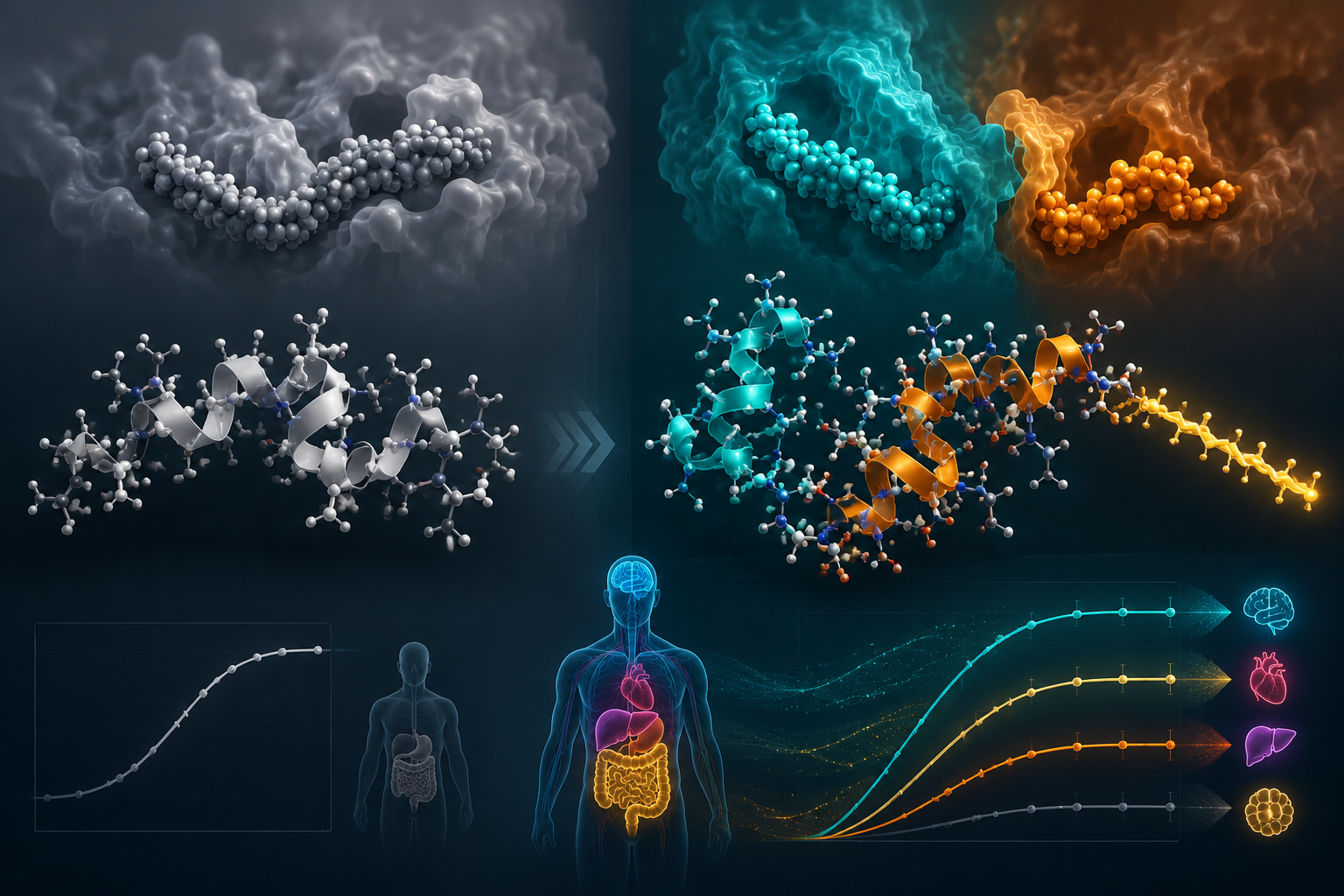
Tirzepatide and semaglutide differ fundamentally in their receptor targets and downstream signaling pathways, which translates to distinct metabolic effects in research models. Semaglutide is a selective GLP-1 receptor agonist, meaning it activates only GLP-1 receptors with high affinity and specificity.[1][4] Tirzepatide, by contrast, activates both GIP and GLP-1 receptors simultaneously, creating a dual-pathway mechanism.[1][2][4]
Insulin Secretion Mechanisms:
Both compounds enhance glucose-dependent insulin secretion, but through different receptor combinations. Semaglutide’s insulin secretion effects are mediated entirely through GLP-1 receptor activation on pancreatic β-cells.[4] Tirzepatide achieves insulin secretion through both GLP-1 and GIP receptor pathways, with the Duke Health study demonstrating that GIP receptor signaling is indispensable for tirzepatide’s insulin secretion effects.[2] This dual activation produces greater insulin secretion magnitude in preclinical models.
Glucagon Dynamics:
Semaglutide suppresses glucagon secretion through GLP-1 receptor activation on α-cells, which helps reduce hepatic glucose output.[4] Tirzepatide’s effect on glucagon is more complex: GLP-1 receptor activation suppresses glucagon, but GIP receptor activation stimulates it.[2] The net effect depends on the balance of these opposing signals, creating a different glucagon profile than semaglutide alone.
Appetite and Weight Effects:
Both compounds reduce appetite and food intake, but tirzepatide consistently produces greater body weight reduction in head-to-head research comparisons.[1][5] In models without diabetes, tirzepatide 5-15 mg weekly produced 16.5% to 22.4% body weight reduction over 72 weeks, exceeding typical semaglutide outcomes.[5] The enhanced weight loss likely results from additive or synergistic effects of GIP and GLP-1 receptor activation on central appetite circuits and peripheral metabolism.
Gastric Emptying:
Both compounds slow gastric emptying, but the magnitude and duration may differ due to tirzepatide’s dual receptor activity.[3][4] GIP’s effects on gastrointestinal motility add complexity to the gastric emptying profile compared to GLP-1-only agonism.
Lipid Metabolism:
Tirzepatide’s GIP receptor activity influences adipose tissue metabolism and lipid handling in ways that semaglutide does not.[1] GIP promotes lipid storage under fed conditions but may also enhance lipid mobilization under fasting conditions, creating a metabolic flexibility that GLP-1-only agonists lack.
Researchers conducting comparative studies between these compounds should account for these mechanistic differences when designing protocols and interpreting outcomes. For those sourcing research-grade tirzepatide or semaglutide, understanding these distinctions is critical for hypothesis generation and experimental validity.
Tirzepatide’s weight reduction effects in research models are primarily driven by reduced appetite, decreased food cravings, and lower caloric intake, with additional contributions from altered lipid metabolism and energy expenditure.[1][3] The NIH mechanistic review identifies appetite suppression as the dominant mechanism underlying body weight effects, rather than direct metabolic rate enhancement or fat oxidation.[1]
Central Appetite Regulation:
Tirzepatide activates GLP-1 receptors in the hypothalamus and brainstem regions that regulate satiety and food reward. This activation reduces hunger signaling, increases feelings of fullness, and diminishes the hedonic drive to consume palatable foods.[3][4] GIP receptor activation in the central nervous system may also contribute to appetite modulation, though the exact pathways are still being characterized.[1]
Gastric Emptying and Satiety:
By slowing gastric emptying, tirzepatide prolongs the sensation of fullness after meals and reduces the frequency of eating episodes.[3][4] This mechanical effect complements central appetite suppression to reduce total daily caloric intake.
Lipid Metabolism:
Tirzepatide’s GIP receptor activity influences adipose tissue metabolism, potentially enhancing lipid mobilization and oxidation under certain metabolic conditions.[1] While this effect is less dominant than appetite suppression, it contributes to the overall energy deficit and body composition changes observed in research models.
Magnitude of Effect:
In research models without diabetes, tirzepatide 5-15 mg weekly produced dose-dependent body weight reductions ranging from 16.5% to 22.4% over 72 weeks.[5] These outcomes exceed those typically observed with GLP-1-only agonists, suggesting that the dual GIP/GLP-1 mechanism produces additive or synergistic effects on energy balance.
Lean Mass Preservation:
Emerging research suggests that tirzepatide may preserve lean body mass better than diet-induced weight loss alone, though the mechanisms remain under investigation. This could involve GIP’s effects on protein metabolism or indirect effects through improved insulin sensitivity and nutrient partitioning.[1]
Researchers investigating body composition and metabolic research should note that tirzepatide’s weight effects are multifactorial and involve both central nervous system and peripheral metabolic pathways.
Tirzepatide’s onset of action depends on the specific metabolic endpoint being measured, but glucose-lowering effects typically begin within hours of the first dose, while maximal weight reduction effects accumulate over weeks to months in research models.[1][4]
Glucose-Lowering Onset:
Glucose-dependent insulin secretion begins within 1-2 hours of subcutaneous administration as tirzepatide reaches therapeutic plasma concentrations and activates pancreatic GIP and GLP-1 receptors.[4] Fasting glucose reductions become measurable within the first week of dosing in most research protocols.
Steady-State Pharmacokinetics:
Due to tirzepatide’s approximately five-day half-life, steady-state plasma concentrations are achieved after 4-5 weeks of once-weekly dosing.[1][4] Maximal glucose-lowering efficacy typically coincides with steady-state levels, though clinically meaningful reductions are evident earlier.
Weight Reduction Timeline:
Appetite suppression and reduced food intake begin within the first 1-2 weeks of dosing, but measurable body weight reduction typically requires 4-8 weeks to become statistically significant in research models.[1][5] The 16.5% to 22.4% weight reductions reported in 72-week studies represent cumulative effects over extended treatment periods, with the rate of weight loss typically greatest in the first 20-30 weeks before plateauing.[5]
Dose Escalation Considerations:
Research protocols typically employ gradual dose escalation over 8-20 weeks to minimize gastrointestinal side effects while allowing metabolic adaptations to occur.[4][5] This escalation schedule means that maximal efficacy is not achieved until the target maintenance dose is reached and steady-state is established.
Individual Variability:
Onset and magnitude of effects vary based on baseline metabolic status, receptor expression patterns, and concurrent metabolic interventions in research models. Models with higher baseline glucose or greater insulin resistance may show more rapid glucose improvements, while lean models may exhibit slower weight reduction kinetics.
Researchers designing time-course studies should account for these pharmacokinetic and pharmacodynamic timelines when planning measurement intervals and endpoint assessments.
Tirzepatide is called a dual agonist because it activates two different receptors—GIP and GLP-1—at the same time, using a single molecule.[1][4] Think of it as a key that fits two different locks simultaneously, opening both doors to create a combined effect that neither door alone could produce.
The Two Receptors:
GIP (glucose-dependent insulinotropic polypeptide) and GLP-1 (glucagon-like peptide-1) are both incretin hormones—signaling molecules that the gut releases after eating to help regulate blood sugar.[1][4] Each hormone binds to its own receptor on cells throughout the body, triggering different but complementary metabolic responses.
Why Dual Activation Matters:
Activating both receptors simultaneously produces effects that exceed what either receptor could achieve alone. GIP receptor activation enhances insulin secretion and influences fat metabolism, while GLP-1 receptor activation suppresses glucagon, slows digestion, and reduces appetite.[1][2][3] When both pathways are engaged together, the insulin secretion is greater, the appetite suppression is stronger, and the overall metabolic impact is amplified.
The Imbalanced Design:
Tirzepatide doesn’t activate both receptors equally—it has an “imbalanced” profile, meaning it’s more potent at one receptor than the other.[1] This imbalance is intentional and helps optimize the therapeutic effects while managing side effects. The exact ratio is proprietary, but functional studies confirm that the compound’s activity differs between the two receptors.
Single Molecule, Dual Function:
Unlike combination therapies that use two separate drugs, tirzepatide achieves dual agonism with a single peptide molecule. This design simplifies dosing, ensures both receptors are always activated together in a fixed ratio, and creates a consistent pharmacokinetic profile.[1][4]
For researchers new to incretin pharmacology, tirzepatide represents a paradigm shift from single-target to multi-target receptor modulation, opening new avenues for investigating metabolic regulation and energy homeostasis.
Disclaimer: The following information pertains to research use only. Tirzepatide is a research compound intended for laboratory investigation by qualified professionals. It is not approved for human consumption, medical use, or therapeutic application. This section describes contraindications and precautions identified in preclinical and clinical research literature for informational purposes only.
Research literature identifies several populations and conditions where tirzepatide use is contraindicated or requires special consideration:
Absolute Contraindications:
Type 1 Diabetes:
Tirzepatide is not appropriate for type 1 diabetes research models because it enhances glucose-dependent insulin secretion from β-cells, which are absent or severely depleted in type 1 diabetes.[4] The compound does not replace basal insulin and cannot address the absolute insulin deficiency characteristic of type 1 diabetes.
Severe Gastrointestinal Disease:
Models with gastroparesis, inflammatory bowel disease, or other severe gastrointestinal conditions may experience exacerbated symptoms due to tirzepatide’s gastric emptying delay.[3][4] The compound’s effects on GI motility can worsen pre-existing motility disorders.
Pancreatitis History:
Research models with a history of pancreatitis require careful consideration, as incretin-based therapies have been associated with pancreatitis risk in some studies, though causality remains debated.[4] Tirzepatide should be discontinued if pancreatitis is suspected in research protocols.
Renal Impairment:
While tirzepatide does not require dose adjustment for mild to moderate renal impairment, severe renal impairment or end-stage renal disease may alter pharmacokinetics and increase adverse event risk.[4] Gastrointestinal side effects leading to dehydration could further compromise renal function.
Pregnancy and Lactation:
Tirzepatide has not been adequately studied in pregnancy or lactation models. GLP-1 receptor agonists generally show limited placental transfer, but safety data are insufficient for recommendation.[4]
Concurrent Insulin or Sulfonylurea Use:
When used alongside insulin or insulin secretagogues in research models, tirzepatide increases hypoglycemia risk due to additive effects on insulin secretion.[4] Dose adjustments of concurrent agents may be necessary.
Researchers must conduct thorough literature reviews and risk assessments before incorporating tirzepatide into experimental protocols, particularly when working with models that have complex metabolic or pathological conditions.
Head-to-head research comparing tirzepatide and semaglutide (Ozempic) consistently demonstrates that tirzepatide produces greater reductions in both HbA1c and body weight in metabolic research models, though both compounds effectively lower glucose.[1][5]
Glucose-Lowering Efficacy:
Both tirzepatide and semaglutide significantly reduce HbA1c in diabetes research models, but tirzepatide typically achieves slightly greater reductions at comparable doses. The dual GIP/GLP-1 mechanism appears to produce additive effects on insulin secretion and glucose homeostasis beyond what GLP-1 agonism alone achieves.[1][2] The magnitude of difference varies by dose and baseline metabolic status, but meta-analyses suggest tirzepatide’s advantage is consistent across studies.
Weight Reduction Superiority:
Tirzepatide produces substantially greater body weight reduction than semaglutide in direct comparisons. In models without diabetes, tirzepatide 5-15 mg weekly achieved 16.5% to 22.4% weight reduction over 72 weeks, exceeding typical semaglutide outcomes of 10-15% at comparable durations.[5] This weight advantage persists in diabetes models as well, suggesting that the dual incretin mechanism enhances appetite suppression and metabolic effects beyond GLP-1-only agonism.
Mechanistic Basis for Superiority:
The enhanced efficacy likely stems from tirzepatide’s dual receptor activation creating synergistic or additive effects on multiple metabolic pathways.[1][2] GIP receptor signaling contributes to insulin secretion, influences adipose tissue metabolism, and may enhance central appetite regulation in ways that complement GLP-1 effects. The Duke Health study’s finding that GIP receptor activity is indispensable for tirzepatide’s insulin secretion provides mechanistic support for this superiority.[2]
Side Effect Profile:
Both compounds produce similar gastrointestinal side effects (nausea, vomiting, diarrhea) due to shared GLP-1 receptor activation and gastric emptying delay.[3][4] The incidence and severity of these effects are comparable between tirzepatide and semaglutide at equivalent doses, though individual tolerance varies.
Clinical Context:
The “better” compound depends on research objectives. For maximal glucose lowering and weight reduction, tirzepatide demonstrates superior efficacy. For models where GLP-1-specific effects are the focus, or where cost and availability favor semaglutide, the GLP-1-only agonist remains a valid choice. Researchers should select compounds based on specific experimental aims and mechanistic questions.
For laboratories comparing these compounds, high-purity research-grade tirzepatide enables rigorous head-to-head studies with consistent formulation quality.
The most common adverse effects of tirzepatide in research models are gastrointestinal in nature and directly result from the compound’s mechanism of action—specifically GLP-1 receptor activation and delayed gastric emptying.[3][4]
Nausea and Vomiting:
Nausea is the most frequently reported side effect, occurring in 20-40% of research subjects depending on dose and escalation schedule.[4] This effect results from GLP-1 receptor activation in the brainstem area postrema, a region that regulates nausea and emesis. Slowed gastric emptying also contributes by prolonging gastric distension and altering normal digestive rhythms.[3]
Diarrhea and Constipation:
Altered gastrointestinal motility produces both diarrhea and constipation in different subjects, reflecting individual variation in GI tract sensitivity to incretin signaling.[4] GLP-1 receptors are expressed throughout the GI tract, and their activation modulates intestinal secretion, absorption, and motility patterns.
Decreased Appetite:
While therapeutically desired for weight reduction, the appetite suppression can be experienced as an adverse effect when it leads to inadequate caloric intake or nutritional deficiencies.[3][4] This effect is central (hypothalamic GLP-1 receptor activation) and peripheral (gastric emptying delay and satiety hormone modulation).
Injection Site Reactions:
Local reactions at subcutaneous injection sites (erythema, pruritus, induration) occur in a minority of subjects and likely reflect immune responses to the peptide or excipients rather than the pharmacological mechanism.[4]
Hypoglycemia:
Tirzepatide alone rarely causes hypoglycemia because its insulin secretion effects are glucose-dependent—insulin is released only when blood glucose is elevated.[1][4] However, when combined with insulin or sulfonylureas in research protocols, hypoglycemia risk increases due to additive effects on insulin availability.
Pancreatitis:
Rare cases of pancreatitis have been reported with incretin-based therapies, though causality remains uncertain.[4] The mechanism, if real, may involve effects on pancreatic duct secretion or exocrine pancreas function. Researchers should monitor for signs of pancreatitis (elevated lipase, abdominal pain) in long-term studies.
Thyroid C-Cell Effects:
In rodent toxicology studies, GLP-1 receptor agonists caused thyroid C-cell hyperplasia and tumors, though relevance to humans remains unclear due to species differences in thyroid C-cell GLP-1 receptor expression.[4] This finding led to contraindications for MTC and MEN 2.
Dose-Dependent Patterns:
Most side effects are dose-dependent and more common during dose escalation phases. Gradual titration over 8-20 weeks reduces the incidence and severity of gastrointestinal effects by allowing physiological adaptation to altered GI motility and appetite signaling.[4]
Researchers designing safety monitoring protocols should anticipate these mechanism-based adverse effects and implement appropriate surveillance and intervention strategies.
Tirzepatide-induced nausea results from two primary mechanisms: direct activation of GLP-1 receptors in the brainstem area postrema and delayed gastric emptying that alters normal digestive signaling.[3][4]
Area Postrema Activation:
The area postrema is a circumventricular organ in the brainstem that lacks a complete blood-brain barrier and expresses high levels of GLP-1 receptors. When tirzepatide activates these receptors, it triggers nausea and emesis signaling pathways that evolved to protect against ingested toxins.[4] This central mechanism explains why nausea can occur even before significant gastric emptying delay develops.
Gastric Emptying Delay:
Tirzepatide slows the rate at which stomach contents empty into the small intestine by activating GLP-1 receptors on gastric smooth muscle and enteric neurons.[3] This delay prolongs gastric distension after meals, which activates mechanoreceptors that signal fullness and, when excessive, nausea. The altered temporal pattern of nutrient delivery to the small intestine also disrupts normal gut hormone secretion patterns, potentially contributing to nausea.
Individual Variability:
Nausea severity varies widely among research subjects due to differences in GLP-1 receptor expression, sensitivity of the area postrema, baseline gastric emptying rates, and psychological factors. Some subjects experience minimal nausea even at high doses, while others develop significant symptoms at low doses.[4]
Dose and Escalation Effects:
Nausea is most common during dose escalation and tends to diminish over time as physiological adaptation occurs.[4] Rapid dose increases overwhelm adaptive mechanisms, while gradual titration allows the GI tract and central nervous system to accommodate altered signaling patterns. This explains why research protocols typically employ 4-8 week intervals between dose increases.
GIP Receptor Role:
GIP receptor activation does not directly cause nausea—GIP receptors are not significantly expressed in the area postrema, and GIP does not delay gastric emptying to the same degree as GLP-1.[1][3] The nausea profile of tirzepatide is therefore primarily attributable to its GLP-1 receptor activity, not its dual agonism per se.
Mitigation Strategies:
In research protocols, nausea can be minimized through gradual dose escalation, administration with meals (to reduce peak plasma concentrations), and use of antiemetic agents when necessary. Understanding the mechanistic basis allows researchers to design protocols that balance efficacy with tolerability.
Tirzepatide is not appropriate for type 1 diabetes research models because its primary mechanism—enhancing glucose-dependent insulin secretion from pancreatic β-cells—cannot function when β-cells are absent or severely depleted.[4]
Mechanistic Incompatibility:
Type 1 diabetes is characterized by autoimmune destruction of pancreatic β-cells, resulting in absolute insulin deficiency. Tirzepatide’s glucose-lowering effects depend on activating GIP and GLP-1 receptors on functional β-cells to stimulate insulin secretion.[1][2][4] Without viable β-cells, this mechanism cannot operate, rendering the compound ineffective for glucose control in type 1 diabetes.
Lack of Basal Insulin Replacement:
Tirzepatide does not provide basal insulin replacement, which is essential for survival in type 1 diabetes. The compound enhances endogenous insulin secretion but does not supply exogenous insulin.[4] Type 1 diabetes models require basal insulin therapy regardless of any adjunctive agents.
Potential Adjunctive Role:
In theory, tirzepatide’s appetite suppression and gastric emptying delay could provide adjunctive benefits in type 1 diabetes models that retain some residual β-cell function (e.g., recent-onset type 1 diabetes or latent autoimmune diabetes in adults).[3][4] However, research in this area is limited, and the compound is not indicated for type 1 diabetes in any regulatory framework.
Ketoacidosis Risk:
Using tirzepatide without adequate basal insulin in type 1 diabetes models could increase diabetic ketoacidosis (DKA) risk by creating a false sense of glucose control while absolute insulin deficiency persists.[4] The appetite suppression might also reduce carbohydrate intake, masking hyperglycemia while ketogenesis continues unchecked.
Research Applications:
For researchers studying type 1 diabetes, tirzepatide is not a suitable intervention for glucose management. However, it could be used in hybrid models (e.g., type 1 diabetes with obesity) to investigate weight reduction effects independent of glucose control, provided adequate insulin replacement is maintained.
The compound’s mechanism fundamentally requires functional β-cells, making it unsuitable as a primary intervention in type 1 diabetes research models.
Tirzepatide enhances insulin secretion from pancreatic β-cells through glucose-dependent mechanisms involving both GIP and GLP-1 receptor activation, but it does not increase β-cell mass or insulin biosynthesis capacity in the long term.[1][2][4]
Glucose-Dependent Insulin Secretion:
When blood glucose is elevated, tirzepatide binding to GIP and GLP-1 receptors on β-cells triggers intracellular signaling cascades that amplify insulin secretion.[1][2] These pathways involve cyclic AMP (cAMP) production, protein kinase A (PKA) activation, and calcium influx—all of which enhance insulin granule exocytosis. Critically, this enhancement occurs only when glucose is present, which explains the low hypoglycemia risk.[4]
GIP Receptor Contribution:
The Duke Health study demonstrated that GIP receptor signaling is indispensable for tirzepatide’s insulin secretion effects in human islet cells.[2] When GIP receptors were blocked, tirzepatide lost its ability to stimulate insulin secretion, even though GLP-1 receptors remained functional. This finding confirms that the dual mechanism is not merely additive—GIP receptor activity is mechanistically essential.
GLP-1 Receptor Contribution:
GLP-1 receptor activation independently enhances insulin secretion and also improves β-cell glucose sensitivity, meaning β-cells respond to lower glucose concentrations than they would without GLP-1 signaling.[4] This effect involves upregulation of glucose transporter expression and glucokinase activity, which enhance glucose sensing.
β-Cell Function vs. Mass:
Tirzepatide improves β-cell function (insulin secretion per cell) but does not substantially increase β-cell mass in most research models.[1][4] Some preclinical studies suggest modest β-cell proliferation or reduced apoptosis with long-term incretin exposure, but these effects are small and inconsistent. The primary benefit is functional enhancement of existing β-cells, not regeneration of lost β-cell mass.
Insulin Biosynthesis:
Tirzepatide does not directly increase insulin gene transcription or proinsulin biosynthesis. The compound enhances secretion of pre-formed insulin from existing granules and may modestly increase insulin mRNA stability, but it does not fundamentally alter β-cell insulin production capacity.[4]
Long-Term Effects:
Chronic tirzepatide exposure may improve β-cell health by reducing glucotoxicity (high glucose-induced β-cell dysfunction) and lipotoxicity (lipid-induced β-cell stress), indirectly preserving insulin secretion capacity over time.[1] However, these effects are secondary to improved metabolic control rather than direct β-cell regeneration.
For researchers investigating insulin dynamics and metabolic regulation, tirzepatide provides a tool to study how dual incretin receptor activation modulates β-cell function in various metabolic contexts.
Tirzepatide’s defining characteristic is its first-in-class dual GIP/GLP-1 receptor agonism, which distinguishes it from all other diabetes medications, including other incretin-based therapies.[1][4][5]
Unique Receptor Profile:
No other approved or widely researched diabetes medication activates both GIP and GLP-1 receptors simultaneously with a single molecule.[1][4] Earlier incretin therapies (exenatide, liraglutide, semaglutide, dulaglutide) are selective GLP-1 receptor agonists. DPP-4 inhibitors (sitagliptin, linagliptin) indirectly enhance both GIP and GLP-1 by preventing their degradation, but they do not directly activate receptors and produce much weaker effects.[4]
Superior Efficacy:
Tirzepatide produces greater HbA1c reductions and substantially greater weight loss than other diabetes medications, including GLP-1-only agonists.[1][5] The 16.5% to 22.4% weight reduction observed in 72-week studies exceeds outcomes from any other pharmacological intervention except bariatric surgery.[5] This superior efficacy stems from the synergistic or additive effects of dual receptor activation on multiple metabolic pathways.
Imbalanced Agonism:
Unlike hypothetical balanced dual agonists, tirzepatide’s imbalanced receptor activity creates a distinct pharmacological profile that optimizes efficacy while managing side effects.[1] This design represents a sophisticated approach to multi-target drug development, where the ratio of activities at different targets is as important as the targets themselves.
Mechanism Diversity:
Compared to other diabetes medication classes:
Tirzepatide’s combination of enhanced insulin secretion, glucagon suppression, gastric emptying delay, and appetite reduction creates a multi-faceted metabolic intervention that no other single medication achieves.[1][3][4]
Research Implications:
For researchers, tirzepatide represents a paradigm shift from single-target to multi-target metabolic modulation. It enables investigation of how simultaneous pathway activation produces emergent effects that cannot be predicted from single-pathway studies. This makes it a valuable tool for systems-level metabolic research and for exploring the therapeutic potential of multi-receptor agonism in other disease areas.
Laboratories conducting comparative pharmacology studies can source research-grade tirzepatide alongside other incretin-based compounds to investigate these mechanistic distinctions in controlled experimental settings.
What is the primary mechanism of action of tirzepatide?
Tirzepatide activates both GIP and GLP-1 receptors simultaneously, enhancing glucose-dependent insulin secretion, suppressing glucagon, slowing gastric emptying, and reducing appetite through central and peripheral pathways.[1][4]
How is tirzepatide different from semaglutide?
Tirzepatide is a dual GIP/GLP-1 receptor agonist, while semaglutide is a selective GLP-1 receptor agonist. Tirzepatide produces greater weight loss and slightly better glucose control due to its dual mechanism.[1][5]
Does tirzepatide work for type 1 diabetes?
No. Tirzepatide requires functional pancreatic β-cells to enhance insulin secretion. Type 1 diabetes involves β-cell destruction, making tirzepatide’s primary mechanism inoperative.[4]
Why does tirzepatide cause nausea?
Nausea results from GLP-1 receptor activation in the brainstem area postrema and delayed gastric emptying that prolongs gastric distension and alters digestive signaling.[3][4]
How long does tirzepatide stay in the body?
Tirzepatide has a half-life of approximately five days, enabling once-weekly dosing. Steady-state plasma concentrations are achieved after 4-5 weeks of weekly administration.[1][4]
Can tirzepatide be used with insulin?
Yes, but concurrent use increases hypoglycemia risk due to additive effects on insulin availability. Insulin doses typically require reduction when tirzepatide is added to research protocols.[4]
What receptors does tirzepatide activate?
Tirzepatide activates both the GIP receptor (GIPR) and the GLP-1 receptor (GLP-1R), both of which are class B G protein-coupled receptors expressed in pancreatic islets, GI tract, and brain.[1][4]
Is GIP receptor activity necessary for tirzepatide to work?
Yes. Research using human islet cells demonstrated that blocking GIP receptors eliminated tirzepatide’s insulin secretion effects, proving that GIP receptor signaling is indispensable, not merely additive.[2]
How much weight loss does tirzepatide produce?
In research models without diabetes, tirzepatide 5-15 mg weekly produced 16.5% to 22.4% body weight reduction over 72 weeks, exceeding outcomes from GLP-1-only agonists.[5]
Does tirzepatide increase insulin production or just secretion?
Tirzepatide enhances insulin secretion from existing β-cells but does not substantially increase insulin biosynthesis capacity or β-cell mass. The effect is functional enhancement, not regeneration.[1][4]
What is the imbalanced agonism profile of tirzepatide?
Tirzepatide does not activate GIP and GLP-1 receptors with equal potency. This intentional imbalance optimizes therapeutic effects and distinguishes tirzepatide’s pharmacology from balanced dual agonists.[1]
Can tirzepatide cause hypoglycemia on its own?
Rarely. Tirzepatide’s insulin secretion effects are glucose-dependent, meaning insulin is released only when blood glucose is elevated. Hypoglycemia risk increases when tirzepatide is combined with insulin or sulfonylureas.[4]
Understanding what tirzepatide mechanism of action entails reveals why this compound represents a fundamental advance in metabolic research. As the first dual GIP/GLP-1 receptor agonist, tirzepatide creates a distinct pharmacological profile that exceeds the capabilities of single-pathway incretin therapies. The compound’s ability to simultaneously enhance glucose-dependent insulin secretion, suppress appetite, slow gastric emptying, and modulate lipid metabolism through coordinated activation of two complementary receptor systems provides researchers with an unprecedented tool for investigating metabolic regulation.
The mechanistic evidence—particularly the Duke Health finding that GIP receptor signaling is indispensable for insulin secretion effects—confirms that tirzepatide’s dual agonism is not merely additive but creates synergistic interactions between pathways.[2] This insight has profound implications for future drug development and for understanding how multi-target interventions can produce emergent effects that single-target approaches cannot achieve.
For research professionals investigating metabolic pathways, body composition regulation, or incretin pharmacology, tirzepatide offers a sophisticated platform for hypothesis testing and mechanistic exploration. The compound’s well-characterized receptor interactions, dose-dependent effects, and extensive preclinical and clinical data make it suitable for rigorous laboratory investigation across multiple research domains.
Next Steps for Researchers:
Laboratories seeking to incorporate tirzepatide into metabolic research protocols should ensure access to high-purity, independently tested compounds with full Certificates of Analysis. Sempica Healthcare provides research-grade tirzepatide at 99.8% purity, enabling reliable, reproducible experimental outcomes. For comparative studies, researchers may also consider tirzepatide 30mg formulations or explore related compounds in the GLP-1/GIP multi-pathway research category.
Understanding tirzepatide’s mechanism of action is essential for designing experiments that leverage its unique dual-receptor pharmacology. As research continues to elucidate the complex interactions between GIP and GLP-1 signaling, tirzepatide will remain a critical tool for advancing metabolic science and exploring the therapeutic potential of multi-target receptor modulation.
Disclaimer: All products discussed in this article are intended for research purposes only. They are not for human consumption, medical use, or therapeutic application. By accessing information about these compounds, you confirm that you are a qualified research professional and will use these products strictly for laboratory research in accordance with applicable regulations.
[1] Pmc12847476 – https://pmc.ncbi.nlm.nih.gov/articles/PMC12847476/
[2] Tirzepatide Has Unique Activity Stimulate Insulin Secretion – https://corporate.dukehealth.org/news/tirzepatide-has-unique-activity-stimulate-insulin-secretion
[3] Tirzepatide Mechanism Of Action – https://www.goodrx.com/classes/gip-receptor-glp-1-receptor-agonists/tirzepatide-mechanism-of-action
[4] Nbk585056 – https://www.ncbi.nlm.nih.gov/books/NBK585056/
[5] S13300 025 01804 W – https://link.springer.com/article/10.1007/s13300-025-01804-w
SEO Meta Title: What Is Tirzepatide Mechanism of Action | Research Guide
What is Retatrutide? How does it affect
What is tirzepatide mechanism of action for

Buy Retatrutide Peptide for weight loss Last