
Buy Semaglutide Research Peptide Online: A peptide for weight loss
Buy Semaglutide Research Peptide Online: A peptide

Last updated: May 20, 2026
Quick Answer
Tirzepatide is a 39-amino acid synthetic peptide that simultaneously activates both GIP (glucose-dependent insulinotropic polypeptide) and GLP-1 receptors, producing compounding effects on insulin secretion, glucagon suppression, and appetite regulation that single-receptor agonists cannot replicate. Qualified research professionals can buy tirzepatide research compound from specialist scientific suppliers — such as Sempica’s tirzepatide 30mg and tirzepatide 60mg formats — for use in controlled laboratory settings only. These compounds are not approved for human consumption or therapeutic application.
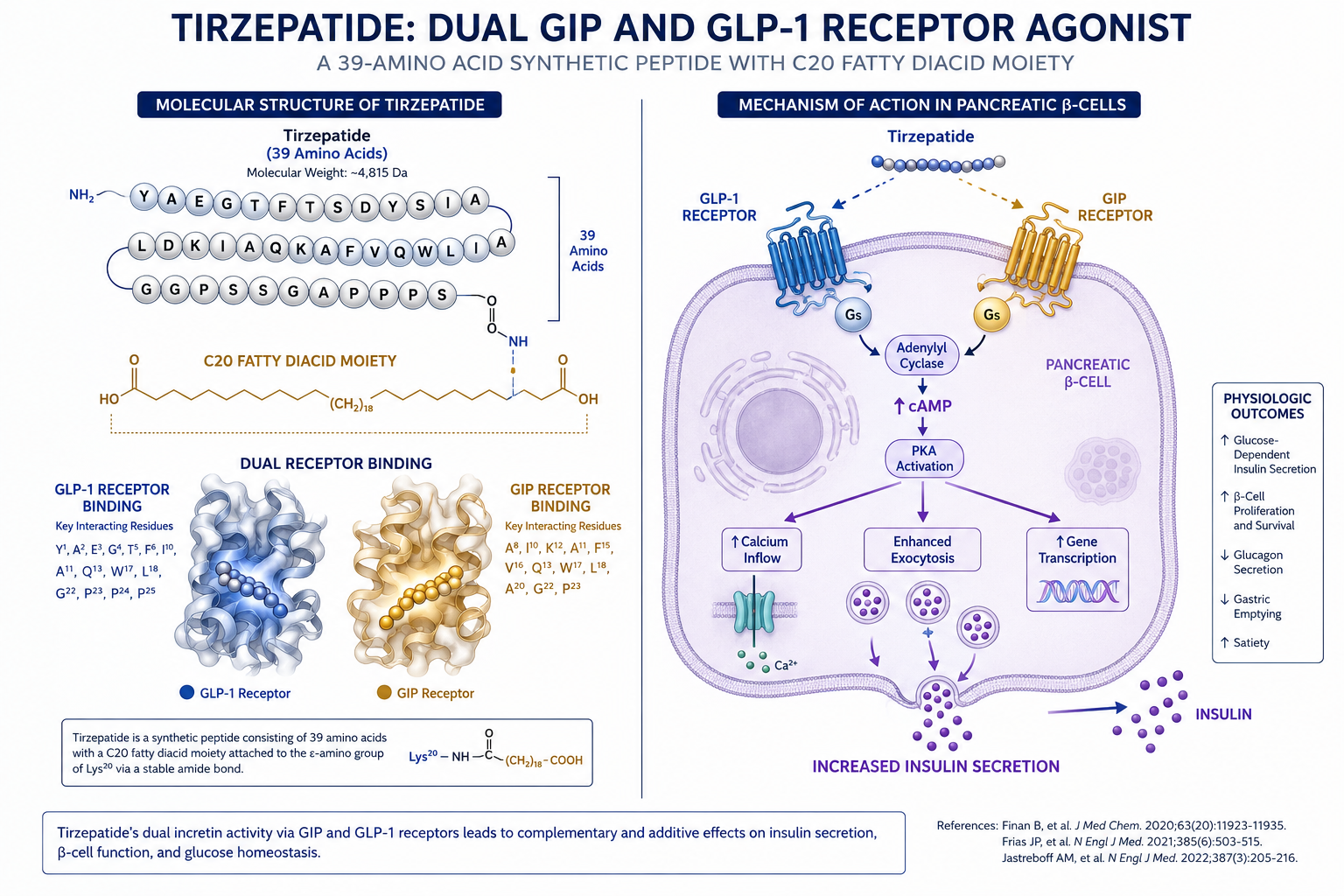
Tirzepatide is a synthetic 39-amino acid peptide engineered as a dual agonist of the GIP and GLP-1 receptors, two distinct incretin hormone pathways that regulate glucose metabolism and energy balance. Its structure incorporates a C20 fatty diacid moiety that extends its plasma half-life to approximately 5 days, enabling sustained receptor engagement in research models without daily administration.
The dual-receptor mechanism works as follows:
The combined activation of both pathways is what makes tirzepatide a compound of particular interest in metabolic research. Preclinical and clinical investigations have consistently shown that dual GIP/GLP-1 agonism produces more pronounced effects on glucose homeostasis and body composition than GLP-1 receptor agonism in isolation. For researchers exploring the GLP/GIP multi-pathway metabolic research space, tirzepatide represents a structurally distinct and mechanistically richer tool than earlier-generation incretin compounds.
Key distinction: Tirzepatide is not a modified GLP-1 analogue with added GIP activity — it is a novel synthetic peptide designed from the ground up to engage both receptor systems with balanced affinity.
In most jurisdictions, tirzepatide is legal to purchase as a research compound, provided the buyer is a qualified research professional and the compound is used exclusively in a controlled laboratory setting. It is not approved for over-the-counter sale or personal use in any country.
The legal framework for research compound procurement varies by country, but the consistent principle across major research jurisdictions is that synthetic peptides and small molecules may be acquired for legitimate scientific investigation without a pharmaceutical licence, as long as they are not administered to humans outside a formally approved clinical trial. Researchers should verify the specific import and possession regulations applicable in their country before placing an order.
Approved research use means:
Purchasing from a compliant supplier — one that enforces research-use-only terms at the point of sale — is both a legal and ethical requirement. Sempica’s terms and conditions make this obligation explicit for every transaction.
The safest place to buy tirzepatide research compound is from a specialist scientific supplier that independently tests every batch to a documented purity standard and provides a Certificate of Analysis for each product. Generic chemical marketplaces and unverified online vendors carry significant risks of adulteration, mislabelling, and degraded compound integrity.
Criteria for evaluating a tirzepatide supplier:
| Criterion | What to Look For |
|---|---|
| Purity standard | 99.8% or higher, independently verified |
| Certificate of Analysis | Provided per batch, from a named third-party laboratory |
| Product format | Lyophilised powder (most stable for shipping and storage) |
| Global shipping | Secure, direct-to-door with cold-chain consideration |
| Compliance | Explicit research-use-only terms enforced at purchase |
| Catalogue breadth | Indicates genuine scientific supply infrastructure |
Sempica Healthcare (sempicahealthcare.ch) meets all of these criteria. All compounds are independently tested to a 99.8% purity standard, and CoAs are available for every product. Tirzepatide is available in 30mg and 60mg formats, with global shipping to 100+ countries. For researchers who want a broader overview of the sourcing process, the guide on how to buy genuine peptides online for laboratory use is a useful starting point.
Tirzepatide occupies a unique position in the incretin research space because it is the only dual GIP/GLP-1 agonist with a well-characterised clinical and preclinical dataset. Its closest comparators in metabolic research are semaglutide (GLP-1 only) and retatrutide (triple GLP-1/GIP/glucagon agonist).
| Compound | Receptor Targets | Half-life | Primary Research Application |
|---|---|---|---|
| Semaglutide | GLP-1 | ~7 days | Metabolic, appetite, cardiovascular |
| Tirzepatide | GLP-1 + GIP | ~5 days | Metabolic, body composition, insulin sensitivity |
| Retatrutide | GLP-1 + GIP + Glucagon | ~6 days | Advanced metabolic, energy expenditure |
Compared to semaglutide, tirzepatide’s additional GIP receptor activity produces measurably different effects on insulin secretion kinetics and adipose tissue metabolism in research models. Compared to retatrutide, tirzepatide lacks glucagon receptor agonism, making it a more targeted tool for studies that need to isolate the GIP/GLP-1 interaction without the confounding variable of glucagon pathway activation.
Choose tirzepatide if your research needs to:
Tirzepatide is used across a range of preclinical and translational research programmes, with the strongest body of investigation concentrated in metabolic disease, body composition, and cardiovascular biology. Laboratory investigations indicate that the compound’s dual receptor mechanism makes it particularly useful for studies where the additive effects of GIP and GLP-1 co-activation need to be characterised independently of glucagon pathway involvement.
Primary research applications include:
Researchers working in adjacent areas — such as endocrine and growth hormone research — may also find tirzepatide useful as a reference compound when studying the broader hormonal regulation of energy balance.
Yes. Tirzepatide is one of the most well-characterised compounds available for metabolic and diabetes-related research in 2026. Its dual GIP/GLP-1 mechanism directly engages the two primary incretin pathways implicated in glucose-dependent insulin secretion, making it a logical choice for studies investigating type 2 diabetes pathophysiology, insulin resistance, and beta-cell function.
Laboratory investigations using tirzepatide in preclinical models have explored its effects on fasting glucose, postprandial insulin response, HbA1c-equivalent markers in animal models, and hepatic glucose output. The compound’s approximately 5-day half-life also makes it practical for weekly-dosing protocols in longer-term metabolic studies, reducing the administrative burden of daily compound administration.
For research programmes that require comparison data across the incretin class, tirzepatide pairs naturally with semaglutide (GLP-1 only) and retatrutide (triple agonist) to build a complete picture of how receptor selectivity affects metabolic outcomes.
Correct storage is non-negotiable for maintaining tirzepatide’s structural integrity and research validity. Lyophilised tirzepatide powder is stable at -20°C and should be stored in this condition immediately upon receipt, away from light and moisture. Once reconstituted, the solution should be refrigerated at 2–8°C and used within 28 days.
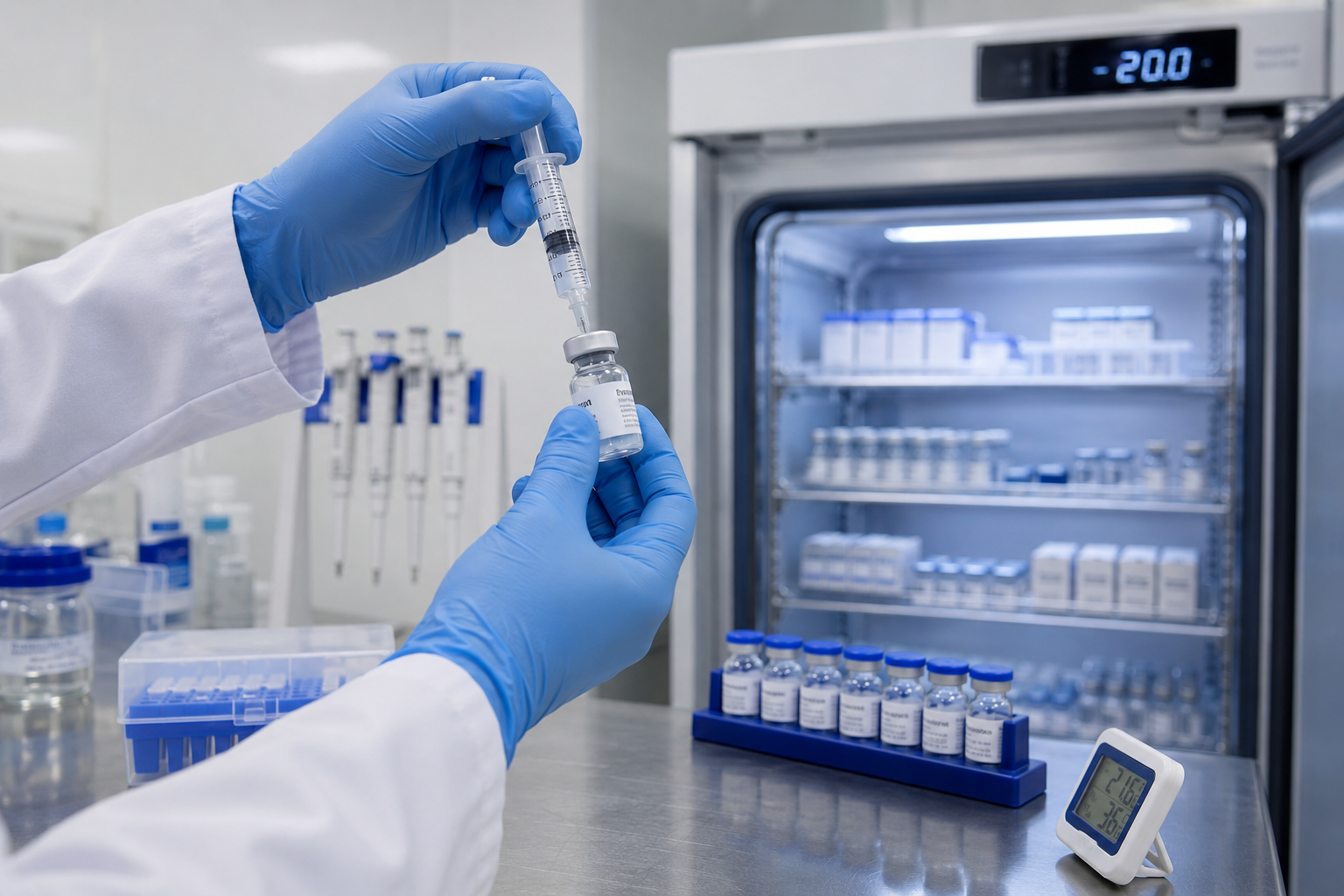
Storage protocol at a glance:
For reconstitution, inject bacteriostatic water slowly down the inside wall of the vial rather than directly onto the lyophilised cake. Gently swirl until fully dissolved — do not shake or vortex. Label each vial with the reconstitution date. For a detailed protocol, Sempica’s comprehensive laboratory guide on mixing and storing peptides covers the full procedure.
Concentration calculation: Divide the total peptide mass (mg) by the volume of bacteriostatic water added (mL). For example, adding 2mL to a 10mg vial yields a 5mg/mL working solution.
Proper handling of tirzepatide in a research setting requires standard peptide laboratory equipment. No specialised infrastructure beyond a well-equipped research laboratory is needed, but each item listed below is essential for maintaining compound integrity and experimental validity.
Required equipment:
Common mistake: Using sterile water (no preservative) instead of bacteriostatic water for reconstitution. Sterile water produces a solution that must be used within 24 hours, whereas bacteriostatic water extends usable life to 28 days when refrigerated. For most research protocols, bacteriostatic water is the correct choice.
The most consequential errors occur at the sourcing and storage stages, not during experimental use. Purchasing from an unverified supplier without a CoA is the single most damaging mistake a researcher can make, because it introduces an uncontrolled variable — compound purity — that invalidates all downstream data.
The most frequent errors, and how to avoid them:
Restrictions vary by jurisdiction, but the universal requirement is that tirzepatide must be purchased for legitimate research purposes by a qualified professional. In most countries, research compounds are not classified as controlled substances, but they are subject to import regulations and may require documentation confirming their research-only application.
Researchers should note that tirzepatide is a pharmaceutical compound approved for clinical use in several major markets (under the brand name Mounjaro, among others). This approval does not extend to research-grade compound procurement — the two supply chains are entirely separate. Research-grade tirzepatide is not a pharmaceutical product and must not be treated as one.
Practical restrictions to be aware of:
Sempica’s shipping and customs disclaimer provides country-specific guidance relevant to international orders.
Research-grade tirzepatide pricing reflects the complexity of its synthesis, the cost of independent purity testing, and the supplier’s quality infrastructure. Pricing varies across the market, but researchers should treat unusually low prices as a red flag — they typically indicate compromised purity standards or absent third-party testing.
At Sempica, tirzepatide is available in two formats designed to support different research scales: a 30mg vial for smaller or pilot studies, and a 60mg vial for larger or longer-duration research programmes. Both are independently tested to 99.8% purity and supplied as lyophilised powder with full CoA documentation.
Factors that affect research compound pricing:
The cost of a compromised experiment — in time, resources, and data integrity — far exceeds any savings from purchasing lower-cost, unverified compounds.
Q: What is tirzepatide’s mechanism of action in simple terms? Tirzepatide activates two hormone receptors simultaneously — GIP and GLP-1 — both of which regulate insulin secretion and energy balance. Activating both at once produces stronger effects on glucose control and appetite regulation than activating either receptor alone.
Q: Can tirzepatide be used for human consumption? No. Research-grade tirzepatide is strictly for laboratory use by qualified professionals. It is not approved for self-administration or any form of human therapeutic use outside formally approved clinical trials.
Q: What purity standard should research-grade tirzepatide meet? A minimum of 99.8% purity, independently verified by a named third-party laboratory and documented in a Certificate of Analysis. Do not purchase from suppliers who cannot provide this documentation.
Q: How long does reconstituted tirzepatide remain stable? When reconstituted with bacteriostatic water and stored at 2–8°C, tirzepatide solution is stable for up to 28 days. Never freeze a reconstituted solution.
Q: What is the difference between tirzepatide and semaglutide as research compounds? Semaglutide is a GLP-1 receptor agonist only. Tirzepatide activates both GLP-1 and GIP receptors. This makes tirzepatide the appropriate choice when research needs to characterise dual incretin pathway effects, while semaglutide is better suited for GLP-1-specific investigations.
Q: Is tirzepatide available in different quantities for research? Yes. Sempica supplies tirzepatide in 30mg and 60mg formats to accommodate different research scales, from pilot studies to extended preclinical programmes.
Q: What is a Certificate of Analysis and why does it matter? A CoA is a document from an independent testing laboratory confirming a compound’s identity, purity, and potency. It is the primary evidence that a research compound meets the quality standard required for valid scientific investigation. Always request a CoA before using any compound in a study.
Q: How should tirzepatide be shipped to maintain integrity? Lyophilised tirzepatide should be shipped with cold-chain packaging to prevent temperature excursions. Upon receipt, transfer immediately to a -20°C freezer. Do not leave at room temperature for extended periods.
Q: Can tirzepatide be used alongside other research compounds in a protocol? In preclinical research settings, tirzepatide is sometimes used alongside other metabolic compounds for comparison or combination studies. Any multi-compound protocol should be designed by a qualified researcher with full consideration of each compound’s mechanism and half-life.
Q: What makes Sempica a reliable source to buy tirzepatide research compound? Sempica independently tests all compounds to 99.8% purity, provides CoA documentation for every product, ships globally to 100+ countries, and enforces research-use-only terms at the point of purchase. The platform is purpose-built for qualified research professionals, not consumer markets.
Tirzepatide’s dual GIP/GLP-1 receptor mechanism places it at the forefront of incretin-based metabolic research in 2026. For laboratory professionals investigating glucose homeostasis, insulin sensitivity, body composition, or cardiovascular biology, it offers a mechanistically distinct and well-characterised research tool that neither GLP-1-only nor triple-agonist compounds can fully replicate.
Actionable next steps for qualified researchers:
For researchers exploring complementary compounds in metabolic research — including MOTS-c for mitochondrial and insulin sensitivity studies — Sempica’s catalogue supports multi-compound research programmes with the same purity standard across every product.
All products referenced in this article are intended for research purposes only. They are not for human consumption, medical use, or therapeutic application. By purchasing from sempicahealthcare.ch, you confirm that you are a qualified professional and will use these products strictly for laboratory research.
Buy Semaglutide Research Peptide Online: A peptide
Buy Tirzepatide Compound: The miracle peptide for

What is NAD+ and why does NAD+